

It’s funny. As someone not remotely interested in football, I’ve always found it curious when blokes on holiday will flock to the nearest flatscreen when there’s a “big game” on.
It doesn’t much matter if they’re amongst the most beautiful foothills in Italy, or overlooking an awe-inspiring coastline, as the sun sets over gently lapping waves.
They’re there, eyes fixed on Wanderers FC vs Kickers United, screaming at the screen as if their fate is decided by who manages to kick the ball into the net.
I never really understood it. Until yesterday.
I’m writing this from Necker Island.
Yes, that Necker Island. Home of the world’s richest Richard.
I’ve brought Mrs Sinclair and a couple of pals with me too, as I was invited to come here to speak to a group of seriously smart business owners.
(This came off the back of me doing my content for nearly 10 years, gang!!)
Anyway, Nats turned over in bed yesterday morning, shock plastered all over her face…
“James… are you watching football?!”
I’d forgive her for thinking that.
But my groans and obscenities weren’t aimed at a referee or some star striker from Brazil.
They were directed at John Healey MP. Because yesterday saw the new Autumn Budget.
I took some time to watch the Budget announcement, read some of the commentaries, and reflect on what it means for us hardworking business owners - especially when it all too often feels like we’re being bled dry by the very economy we’re contributing to.
Now that I’ve digested it properly, here’s my take…
The Budget: What Does It Actually Mean For Business Owners?
The Government is talking about “growth in every postcode”.
A lovely catchphrase, sure. But if you run a business, you’ll want to know what that actually means for your wage bill, your cashflow and the money you get to keep.
There’s a fair bit in this Budget. Some help for smaller businesses, perhaps, but also higher employment costs and changes to how entrepreneurs are taxed when they sell.
Here’s what it means for us entrepreneurs, in plain English.
#1. Your Wage Bill is Going Up
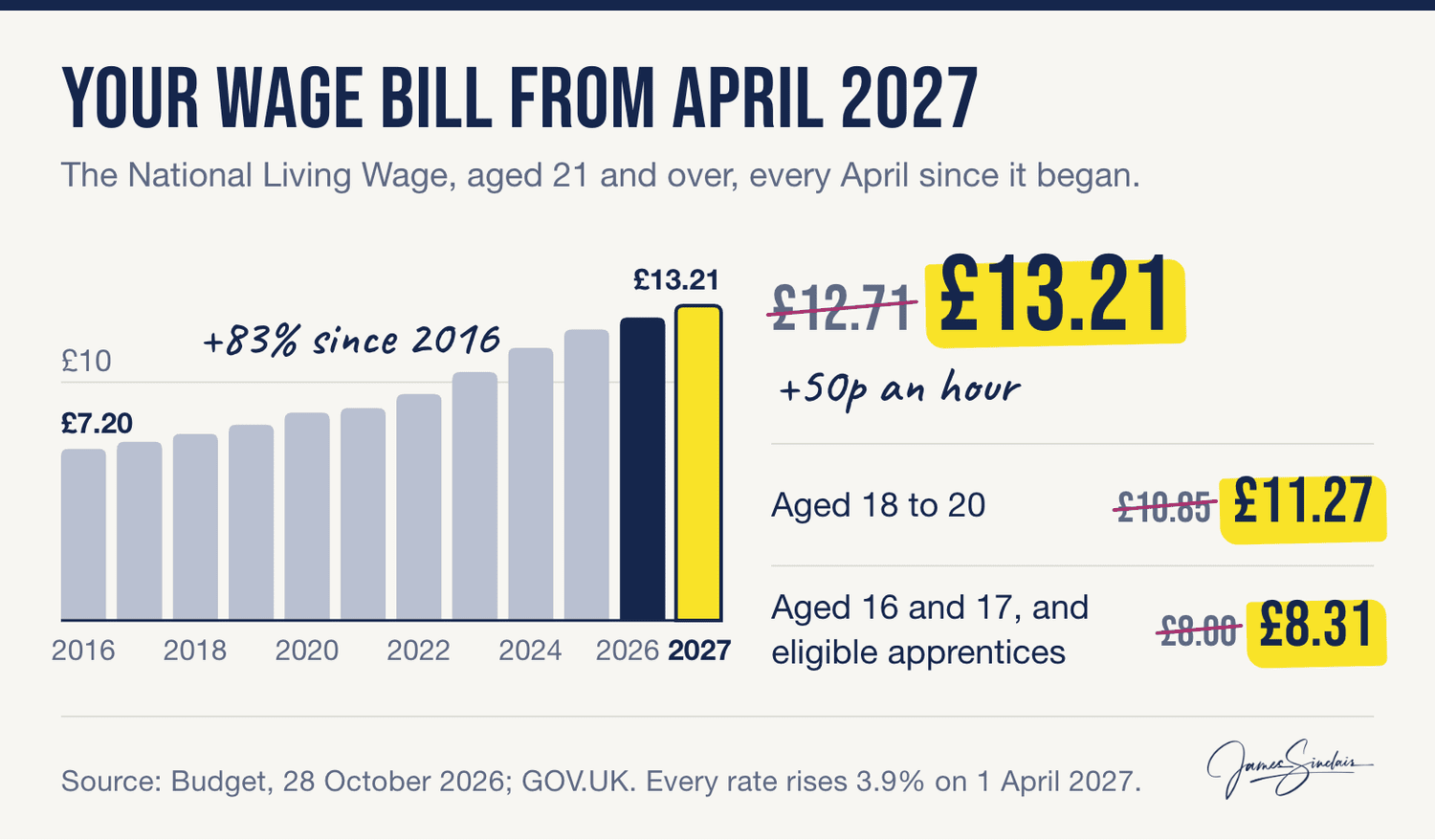
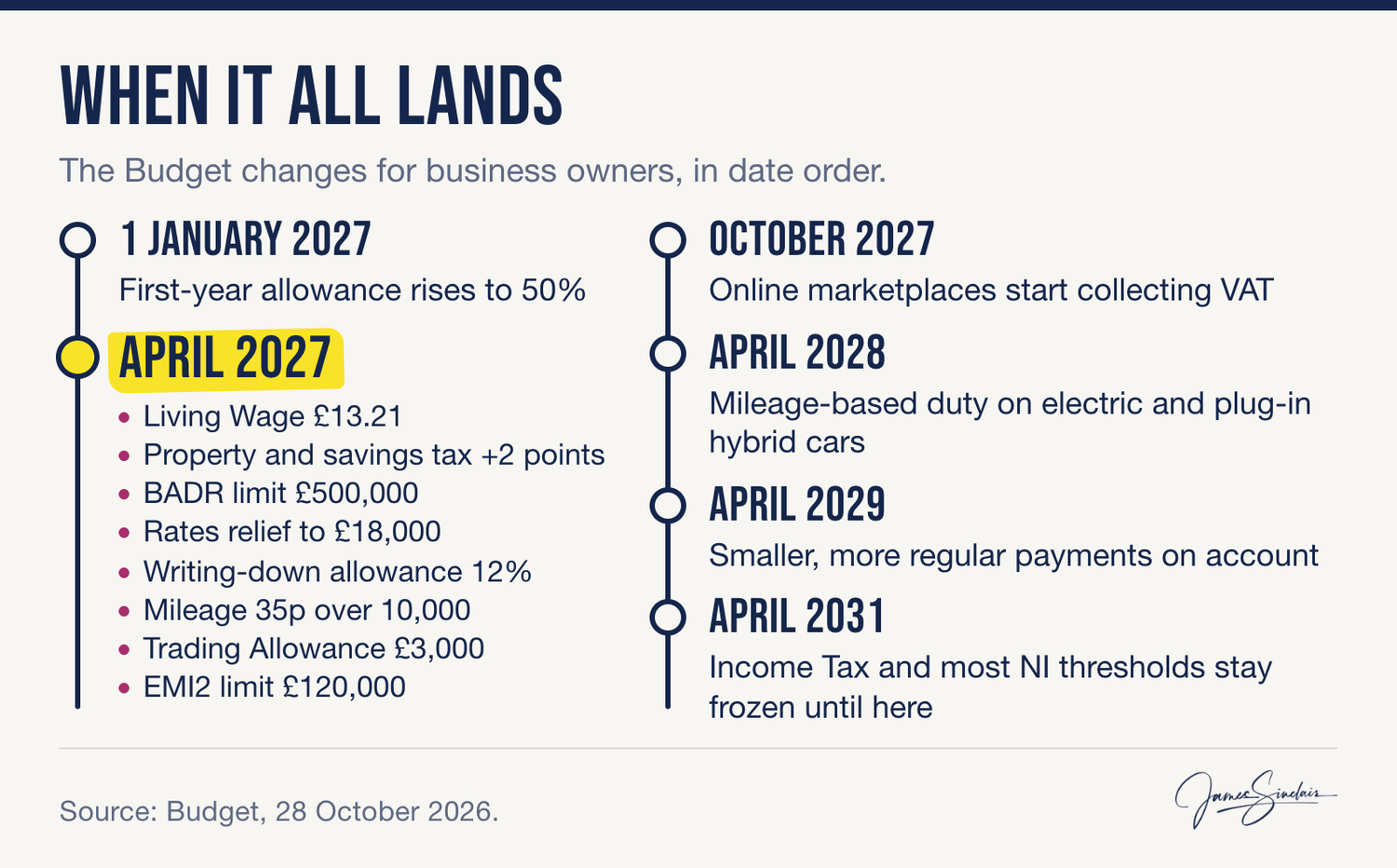
From April 2027, the National Living Wage rises to £13.21 an hour.
The minimum wage for 18 to 20-year-olds goes up too, to £11.27, with the rate for 16 and 17-year-olds and eligible apprentices increasing to £8.31.
If you employ a lot of people, those increases add up, and add up fast.
But what people rarely understand is that these increases rarely stop with the people on minimum wage.
When the starting rate goes up, the person supervising them (understandably) wants to maintain the gap. And it’s us who'll bear the cost of that.
Most of the main National Insurance thresholds are also being frozen until April 2031 too.
Get these changes into your forecasts now. You need to know what next year’s team will cost.
#2. Landlords and Savers will Pay More Tax
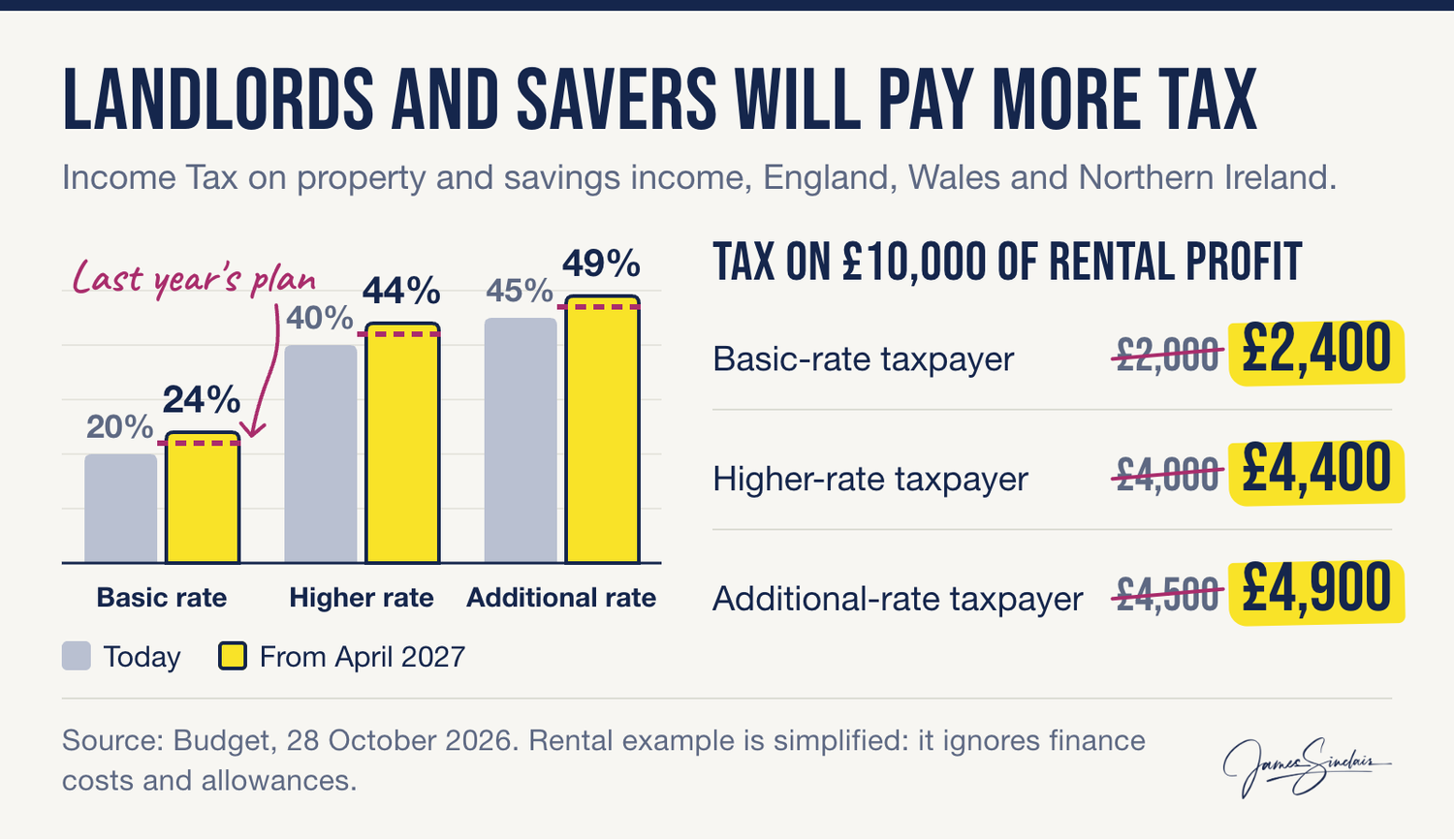
Again, from April 2027, Income Tax rates on property and savings income rise by another two percentage points, bringing the rates to:
- 24% for basic-rate taxpayers.
- 44% for higher-rate taxpayers.
- 49% for additional-rate taxpayers.
At the top rate, that’s nearly half your taxable income.
Other Income Tax rates stay the same, but the Personal Allowance and the higher and additional-rate thresholds remain frozen until April 2031.
A frozen threshold may sound uneventful. But as incomes rise, more money can fall into higher tax bands.
Meaning your tax bill can grow without the headline rate moving.
Brilliant.
#3. Selling Your Business? Pay Attention!
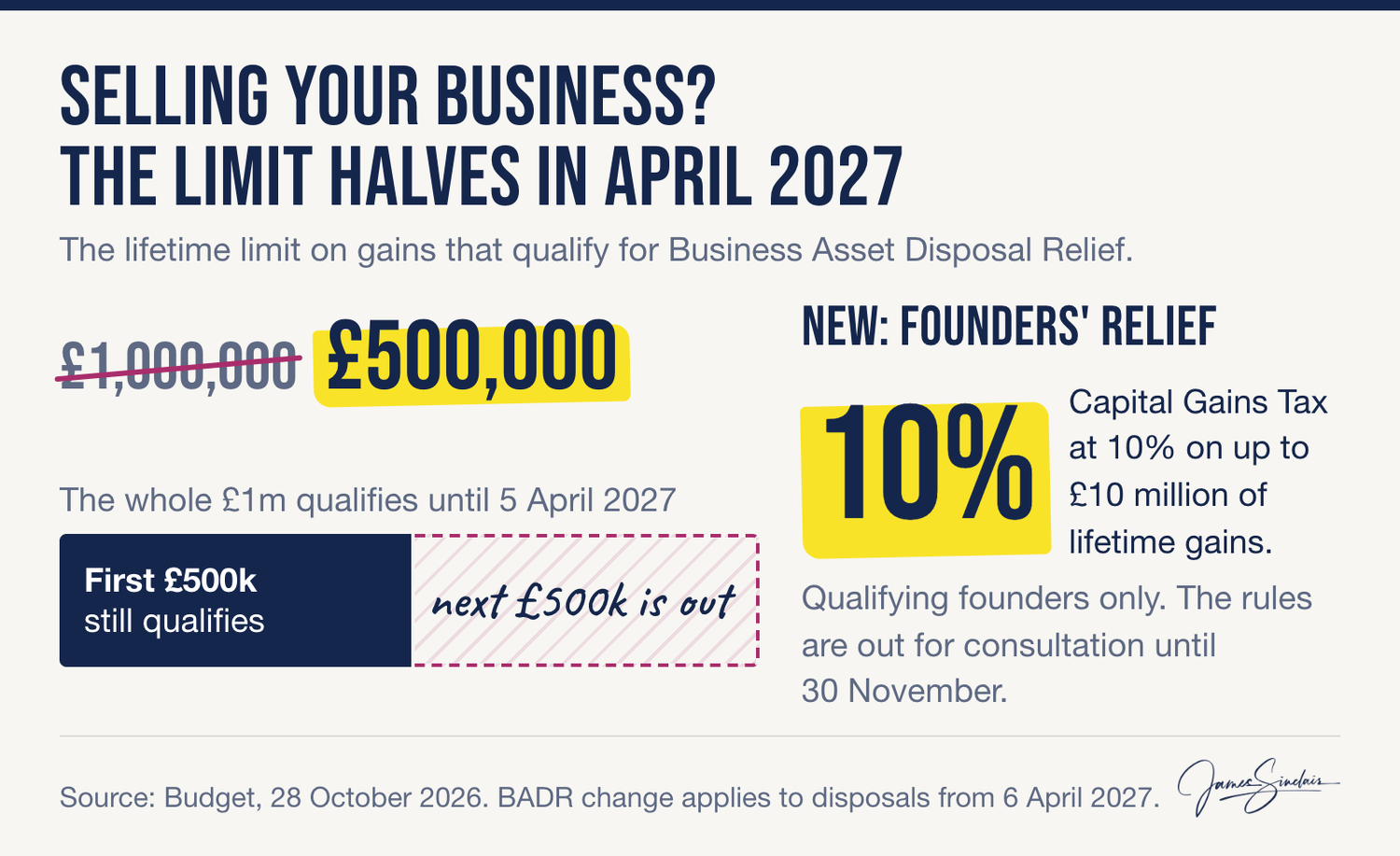
From April 2027, the lifetime limit for gains qualifying for Business Asset Disposal Relief (BADR) falls from £1m to £500k.
For someone who’s spent years building a business, that really matters.
And yes, there’s also a new Founders’ Relief, promising a 10% Capital Gains Tax rate on up to £10m of lifetime gains for qualifying founders of high-growth, innovative companies.
But the important word there though is “qualifying”.
Because if the real criteria end up looking anything like the proposed criteria, you’ll have more chance of finding a suitcase stuffed with £50 notes at the end of your garden, than getting a break.
Of course, we'll need to understand the detailed rules before knowing which founders will benefit.
But Inheritance Tax rates and thresholds remain unchanged, with the nil-rate bands frozen until April 2031.
#4. Some Help with Business Rates
A tiny glimmer of hope, perhaps.
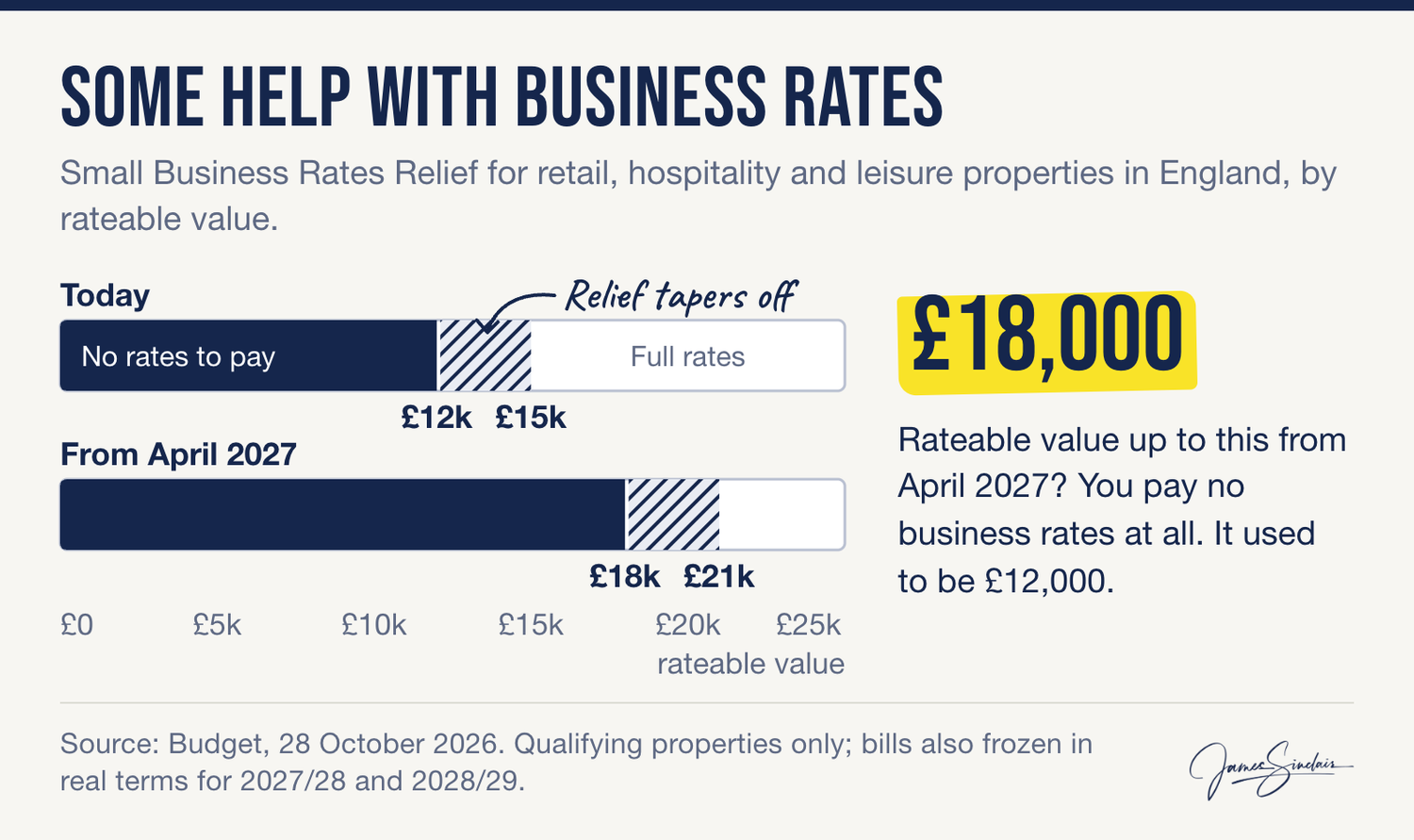
Because for qualifying retail, hospitality and leisure properties in England, the Small Business Rates Relief thresholds increase from April 2027.
The threshold for 100% relief rises 50% from £12,000 to £18,000, and the upper threshold for tapered relief rises from £15,000 to £21,000.
There’ll also be a real-terms freeze in business rates bills for qualifying properties in 2027/28 and 2028/29.
If you operate in these sectors, this deserves a proper look (especially if you have multiple sites).
Because business rates are a bill you have to cover before you’ve served a customer or sold a ticket, so any meaningful relief can make a difference.
#5. Corporation Tax and Investment
The Government has confirmed its commitment to cap the headline Corporation Tax rate at 25% and maintain full expensing.
There are changes to other investment allowances too.
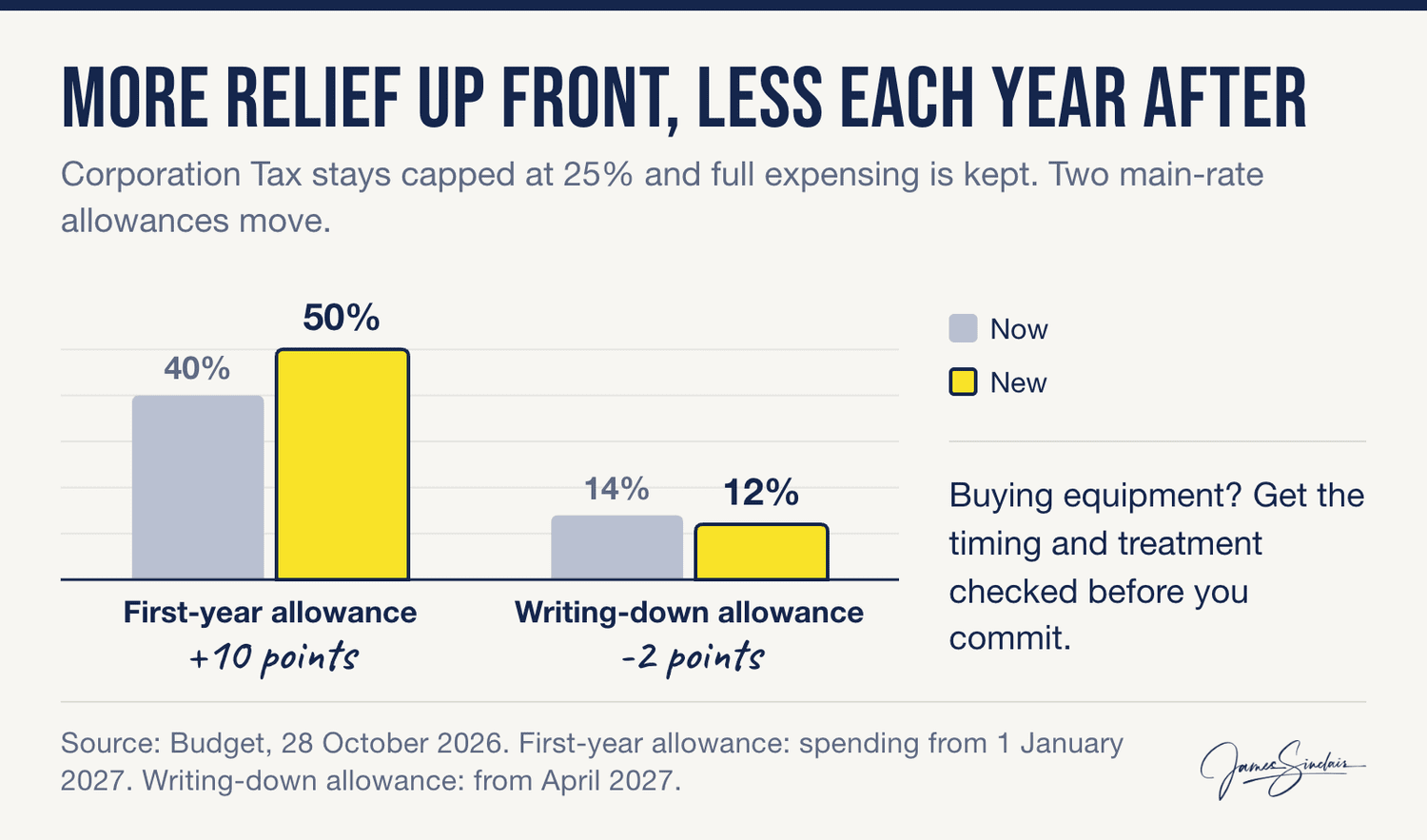
From April 2027, the main writing-down allowance falls from 14% to 12%. The main first-year allowance increases from 40% to 50% for qualifying expenditure incurred from 1 January 2027.
These allowances affect when you get tax relief on investment.
So if you’re planning to spend money on equipment, get the timing and treatment checked before you commit, because timing will make a tangible difference.
#6. More Support for Small Businesses and Employee Ownership
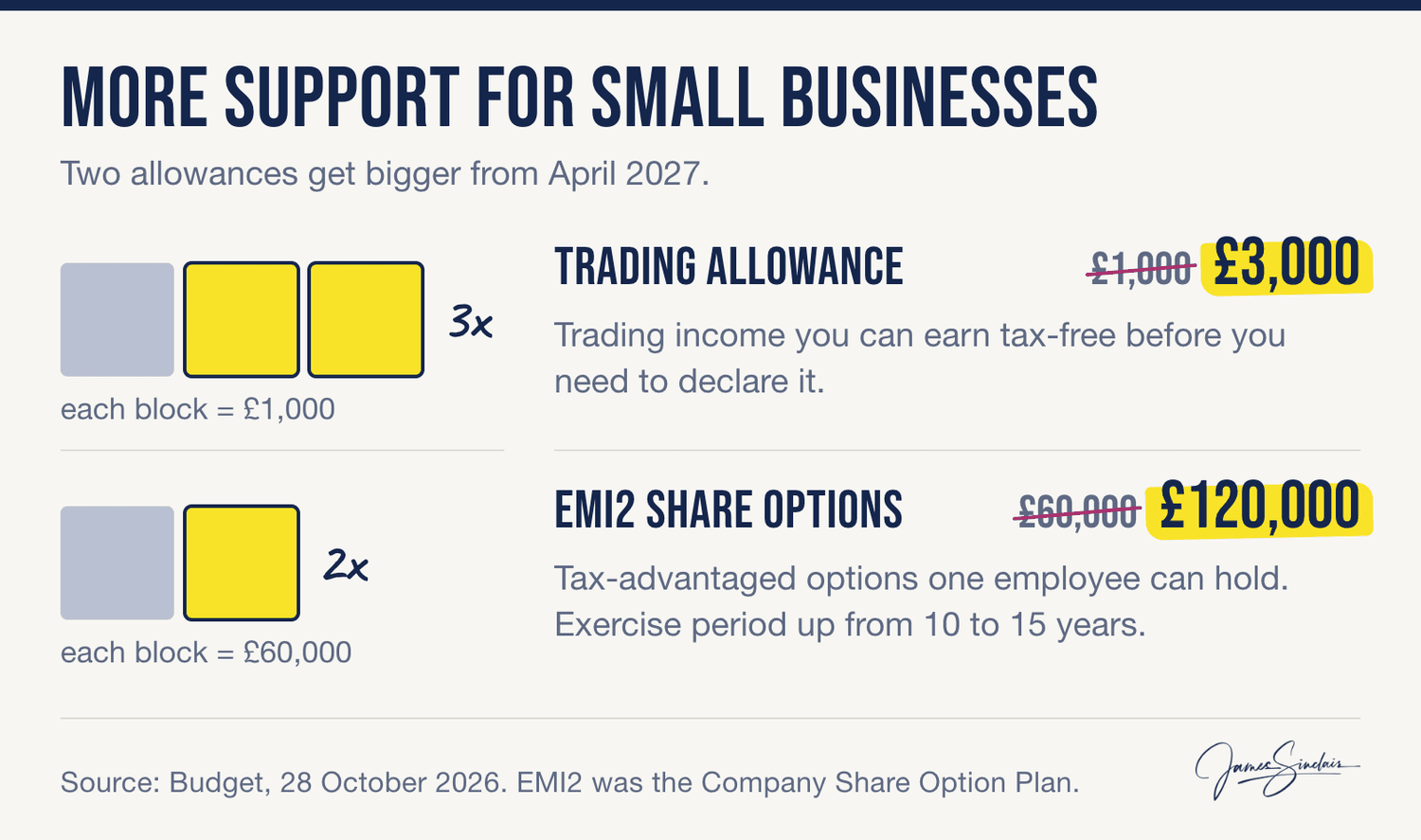
The Trading Allowance will rise from £1,000 to £3,000 from April 2027 which, for someone starting a small venture or earning a bit alongside their job, could be useful.
And the Government will also pilot a Young Entrepreneurs Allowance, providing successful applicants with support towards living costs during their first year in business.
Getting started is difficult enough when you still have to pay the household bills. As always, the details will determine how useful this becomes.
There are changes to employee share options too.
Under the expanded EMI2 scheme - formerly the Company Share Option Plan - the value of tax-advantaged options an employee can hold doubles from £60,000 to £120,000 from April 2027.
The exercise period extends from 10 to 15 years.
So if you have key people you want to have a share in the value they help create, this change is definitely worth understanding.
#7. Business Mileage
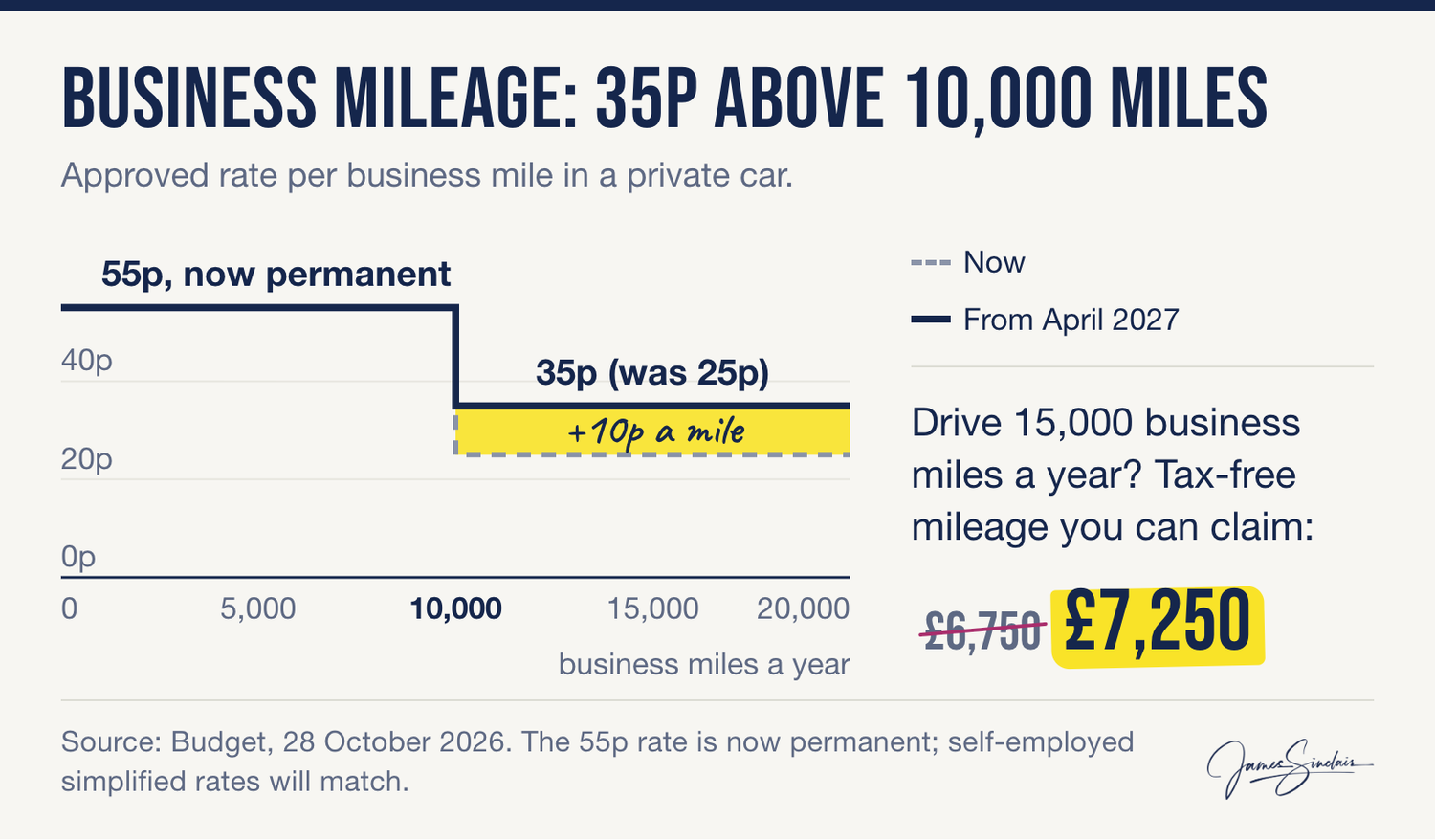
Another small win perhaps, if only for some. The temporary rate of 55p per mile for the first 10,000 business miles in a private vehicle has been made permanent.
And from April 2027, the rate for business miles above 10,000 increases from 25p to 35p.
The simplified mileage rates for the self-employed will match.
Check that your expenses policy and accounting systems reflect the changes.
#8. Energy and Fuel
Funding has been confirmed for the ‘British Industrial Competitiveness Scheme’ - intended to cut electricity bills by up to 25% for more than 10,000 energy-intensive businesses from April 2027.
The temporary 0% VAT rate on qualifying domestic electricity supplies in Great Britain is being extended for another three months, until July 2027.
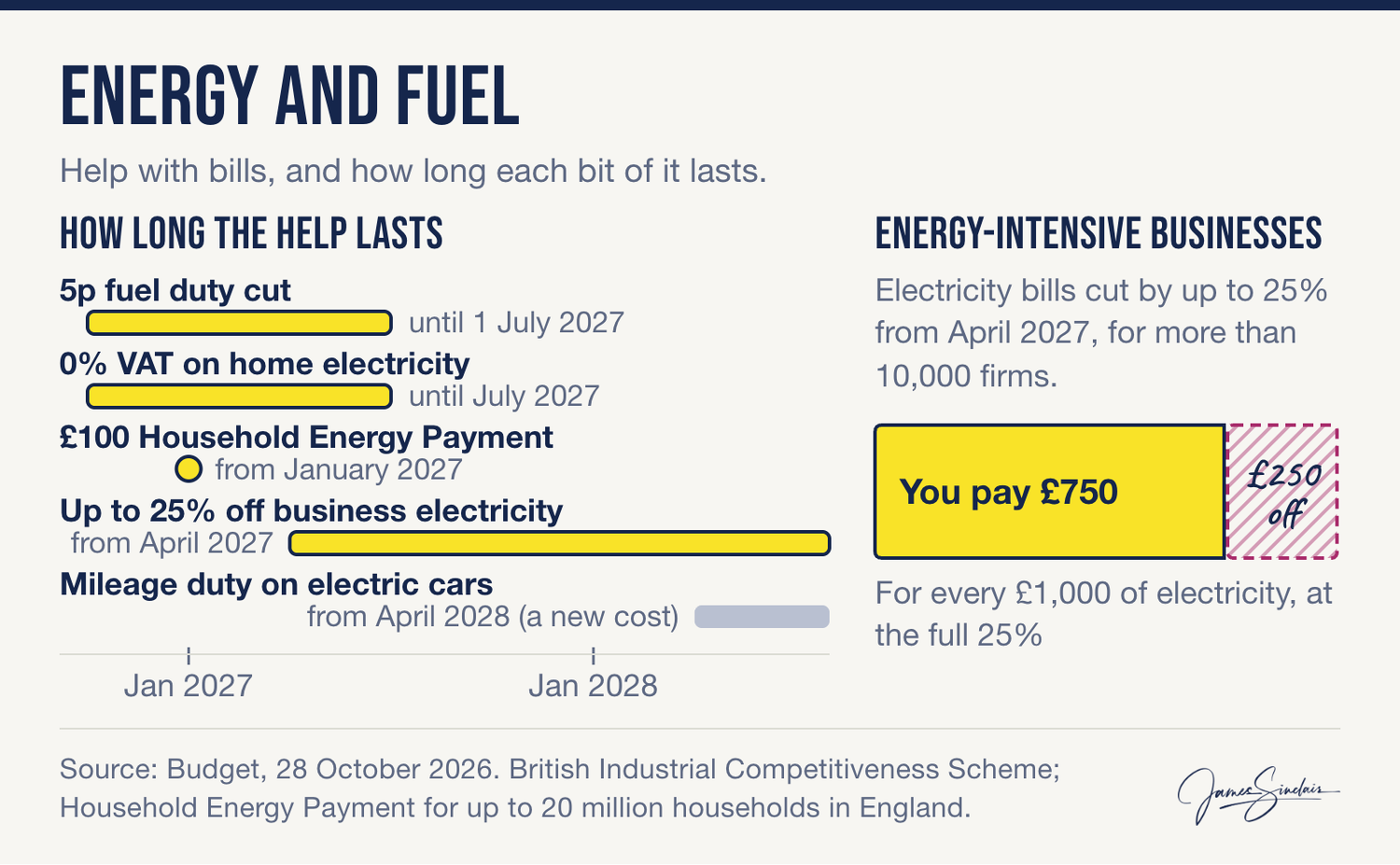
A further £2.6 billion will go towards the Household Energy Payment, with up to 20 million households in England receiving £100 through the council tax system from January 2027, with the 5p fuel duty cut also being extended to 1 July 2027.
And, as previously announced, a mileage-based Electric Vehicle Excise Duty is due to begin for electric and plug-in hybrid cars from April 2028.
#9. Savings, First Homes And Pensions
The annual cash ISA subscription limit stays at £20,000 from April 2027.
And a new First Time Buyer ISA is due from April 2029, where people will be able to contribute up to £4,000 a year and receive a 25% government bonus towards a qualifying first home.
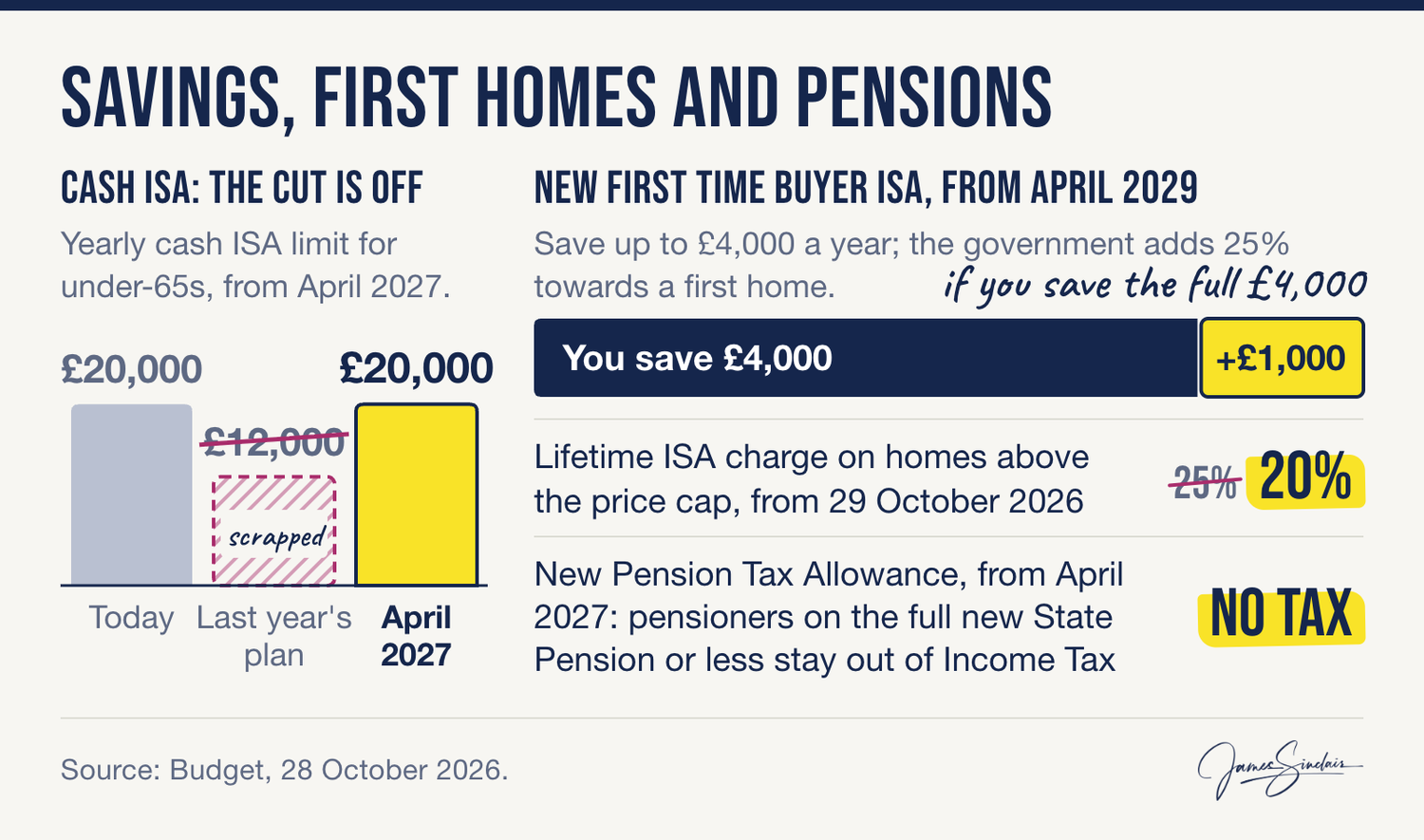
But from 29 October 2026, the Lifetime ISA withdrawal charge for purchases above the property price cap falls to 20%.
A new Pension Tax Allowance will also arrive from April 2027. Its purpose, to prevent pensioners whose incomes are at or below the full new State Pension from being brought into Income Tax because of State Pension increases during this Parliament.
#10. Tax Payments Will Become More Regular
From April 2029, taxpayers who already make Payments on Account will move towards smaller, more regular contributions throughout the year.
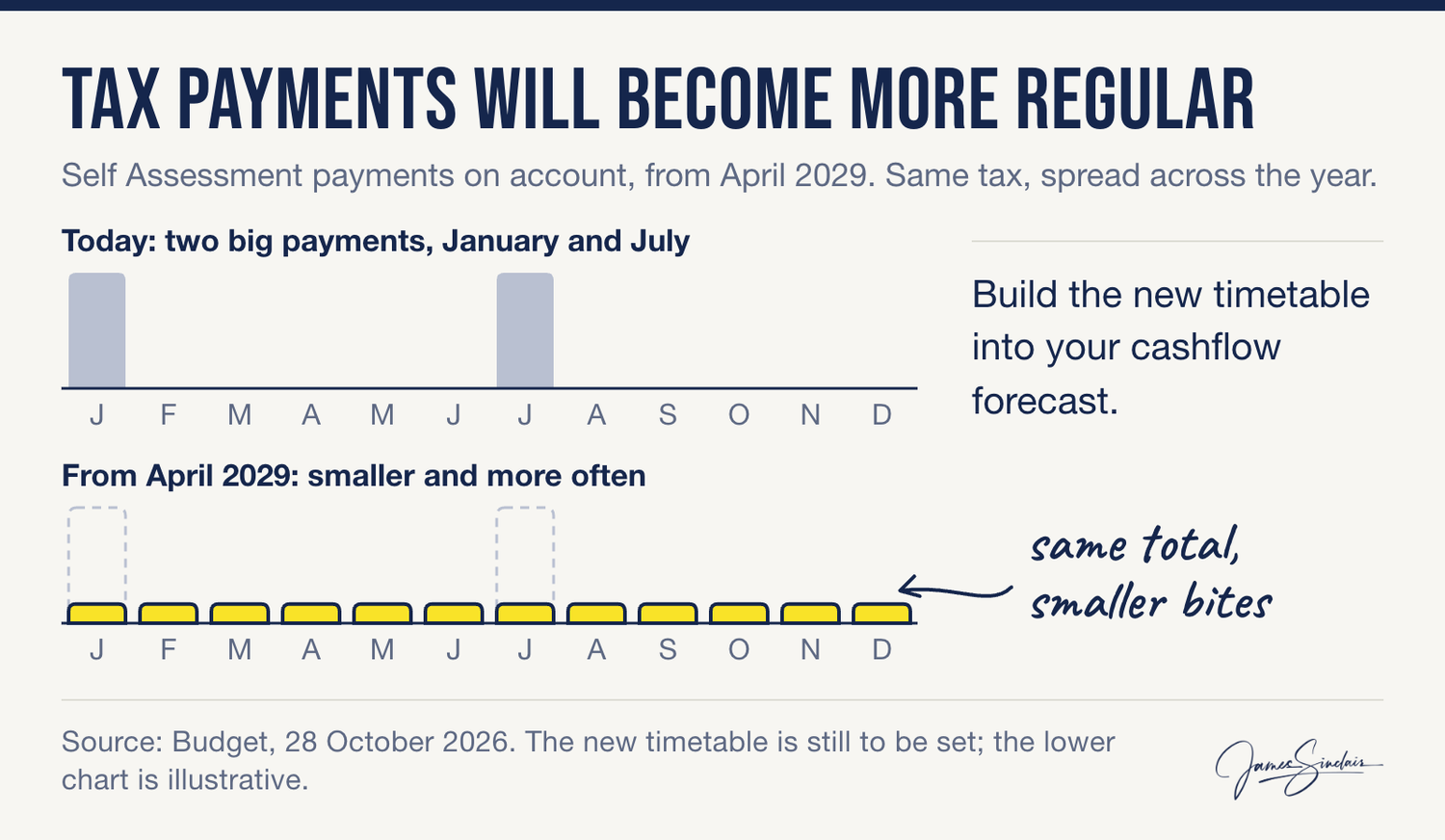
The intention is to bring tax payments closer to when income is earned.
For the self-employed, that means understanding a new payment timetable and building it into cashflow forecasts. Worth discussing with your bookkeeper or accountant.
#11. VAT And Online Marketplaces
VAT rates and thresholds remain unchanged (I'll let you guess how I feel about that!).
And from October 2027, online marketplaces will become responsible for collecting VAT on sales by UK VAT-registered businesses, as well as other UK businesses meeting the £90,000 annual sales threshold per platform.
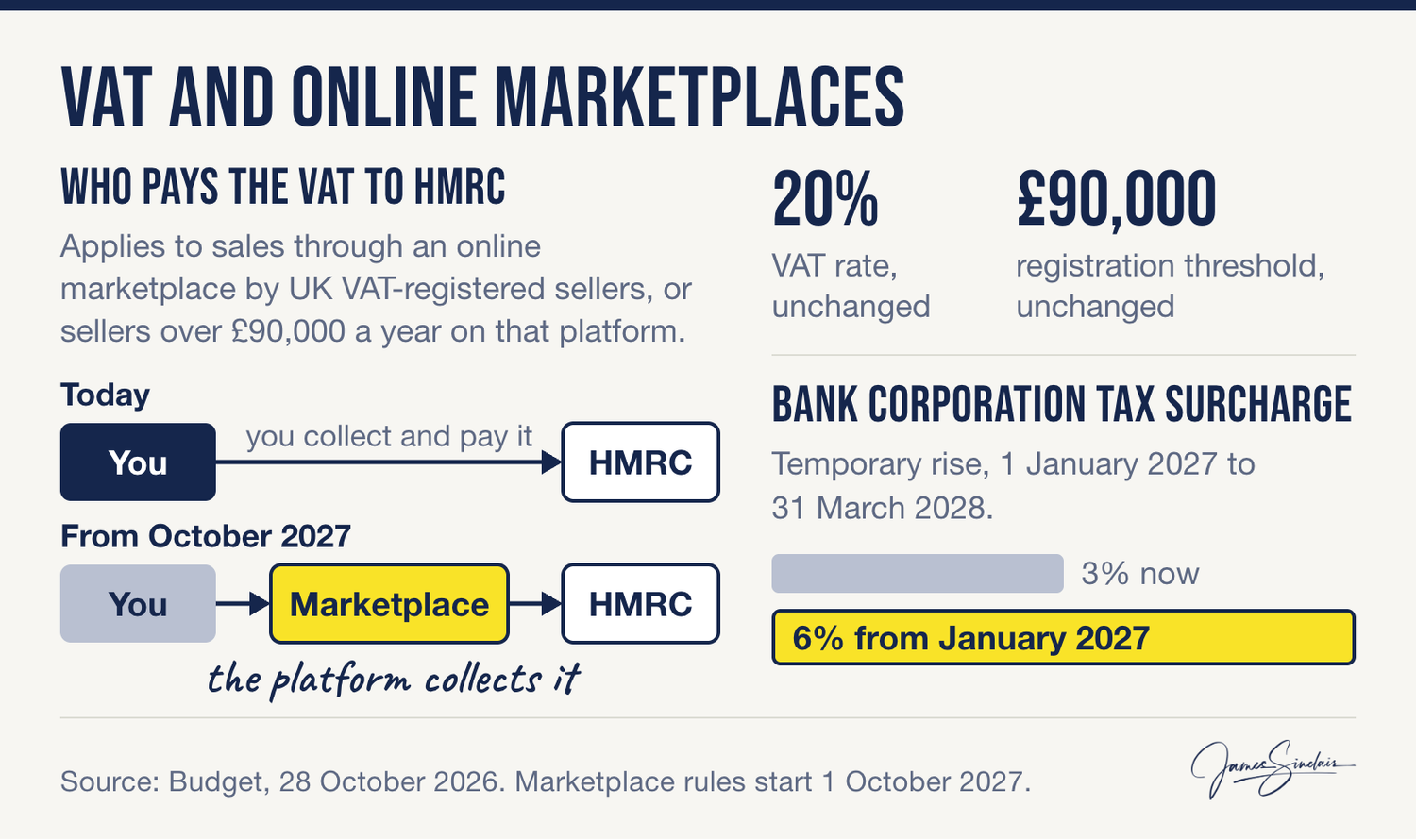
If you sell through a marketplace, this could change how VAT is collected on your sales.
The Bank Corporation Tax Surcharge will also temporarily rise from 3% to 6%, from January 2027 until the end of March 2028.
Not that it will affect you or I directly, unless you happen to own a massive bank.
But we can’t know just yet what impact there’ll be on indirect charges, if banks look to pass these costs on.
Finally, What I’d Take from All This
Look, there are announcements here that could help smaller businesses.
But there are also changes that will put even more pressure on the costs of running a business, and what we’ll get to keep if and when we choose to sell.
Regardless, the most useful thing you can do now though, is to put the relevant numbers into your business.
What happens to your payroll?
Do you qualify for rates relief?
Will the investment allowances affect a planned purchase?
Do the changes to disposal relief affect your longer-term plans?
I’ll be involving my accountant and working through all the details, and I suggest you do the same. Sooner, rather than later.
But then get back to building a business with good margins, loyal customers, a strong team and healthy cashflow.
Because those things matter every day, regardless of who’s delivering the Budget.
So hang in there, Captain, and as always...
To your continued success,
James Sinclair
P.S. If you found this useful, please consider sharing it with a friend or colleague you think will find it useful too
P.P.S. While I can’t change the outcome of the budget, here are 3 ways I can help you to navigate the waters ahead and build a commercially profitable enterprise that runs without you in it:
#1. Join me at my ‘Buying Businesses Seminar’ on November 10th - There’s still a chance to secure one of the few remaining tickets and discover how you too can find and acquire fantastic businesses (or get the best price when you sell your own).
#2. Watch my Podcast on YouTube - I interview real business owners from all manner of industries, find out what makes them tick, and share what I’d do in their shoes.
#3. Swipe and deploy my proven strategies - I’ve started compiling a series of practical workbooks and bonus video tutorials you can swipe and deploy into your business, starting from just £29.