How to buy a business, from someone who's bought over 20
Day nurseries, a hotel, a theme park, a roller rink, a food wholesaler. Some I paid for in full on day one. Most I didn't. Here's how I find them, what I look for, and how I fund them with as little of my own money as possible.
Watch: how to buy a business and where to find it
Why I buy instead of starting from scratch
The aim is simple. Buy really good, profitable businesses with as little of your own money down at the start as possible. You still pay the seller a fair price. You just keep your own cash for growing the business you've bought.
I set up my first day nursery from scratch. It took three or four years to get it properly profitable. Rather than wait three or four years for every new one, I bought more. I've done that ten times.
Buying a proven, profitable business and bolting it onto what you already own grows you far faster than the organic route. And there's no shortage of them. Owners retire. Some have had enough. Some are going through a divorce and have to sell.
What a good business looks like
Six things I look for before I'll go any further.
Management that stays
When the owner leaves, the business carries on. My formula is E + M = Success: entrepreneurship plus management.
£1m or more in revenue
Turnover gives you room. Lose a few customers and the rest keeps you going. It takes the same effort to buy big as small.
Lots of customers, paying often
A little money from a lot of people, a lot of the time, instead of one key account paying every 60 or 90 days.
A moat
Something a competitor can't copy. Nobody can steal the rooms in a hotel we own. It would cost them millions to build one next door.
Ten years of trading
People are creatures of habit. A business their parents used has a moat of its own.
A seller who wants to sell
Owners who flip-flop drain your time. Motivated sellers work with you to get the deal done.
Miss the first one and you'll regret it. If the founder is the one making everything happen, and it all falls apart when they leave, you're straight back in running it.
If the seller makes everything happen, all you've bought is a job.
What I walk away from: one big customer, one key manager, no cash coming in from day one, and anything a competitor could copy next week.
The questions I ask before I make an offer
These days I'd rather buy a great business for a fair price than a fair business for a great price. My younger self bought for next to nothing and worked tirelessly to fix them, mainly because I had next to nothing.
Every cheap "bargain" was missing the same two things: the entrepreneur and the manager. So before every offer, I run through 14 questions, in order. These are the first three.
Does it fit into the businesses I already own?
Do I feel good about the sellers? This is so important.
Is it a good business that makes good profits?
Where to find businesses to buy
I've bought from all six of these.
Business-for-sale websites
I bought a day nursery and its freehold that way, and got a really good deal.
Landlords
When a trading business in their property goes bust, a landlord often just wants someone to keep it running.
Rightmove
Businesses get listed there too, so keep an eye on it.
A letter to the owner
Spot a great business with an owner near retirement? Write and ask if you can buy it. It's one of the best ways I've found.
Everyone who might hear
Business agents, solicitors, accountants, insolvency practitioners. Tell them you're buying, and in which sectors.
Your own name
It's one of the main reasons I built a personal brand. Every week someone offers me their business, because they think of me first.
Buy in sectors that fold into what you already own. If you manufacture, buy your supply chain. Every one of my companies serves the others, so the cash keeps moving around the group.
How to fund it with as little of your own money as possible
I've paid sellers everything up front plenty of times. But most of my deals have used seller finance, also called vendor finance. I did my first one at 22.
Say the seller wants £1 million. I'll pay part of it on day one, raised from the bank, a property or a private investor. The rest I pay monthly over four years, out of the business's own cash flow and profit.
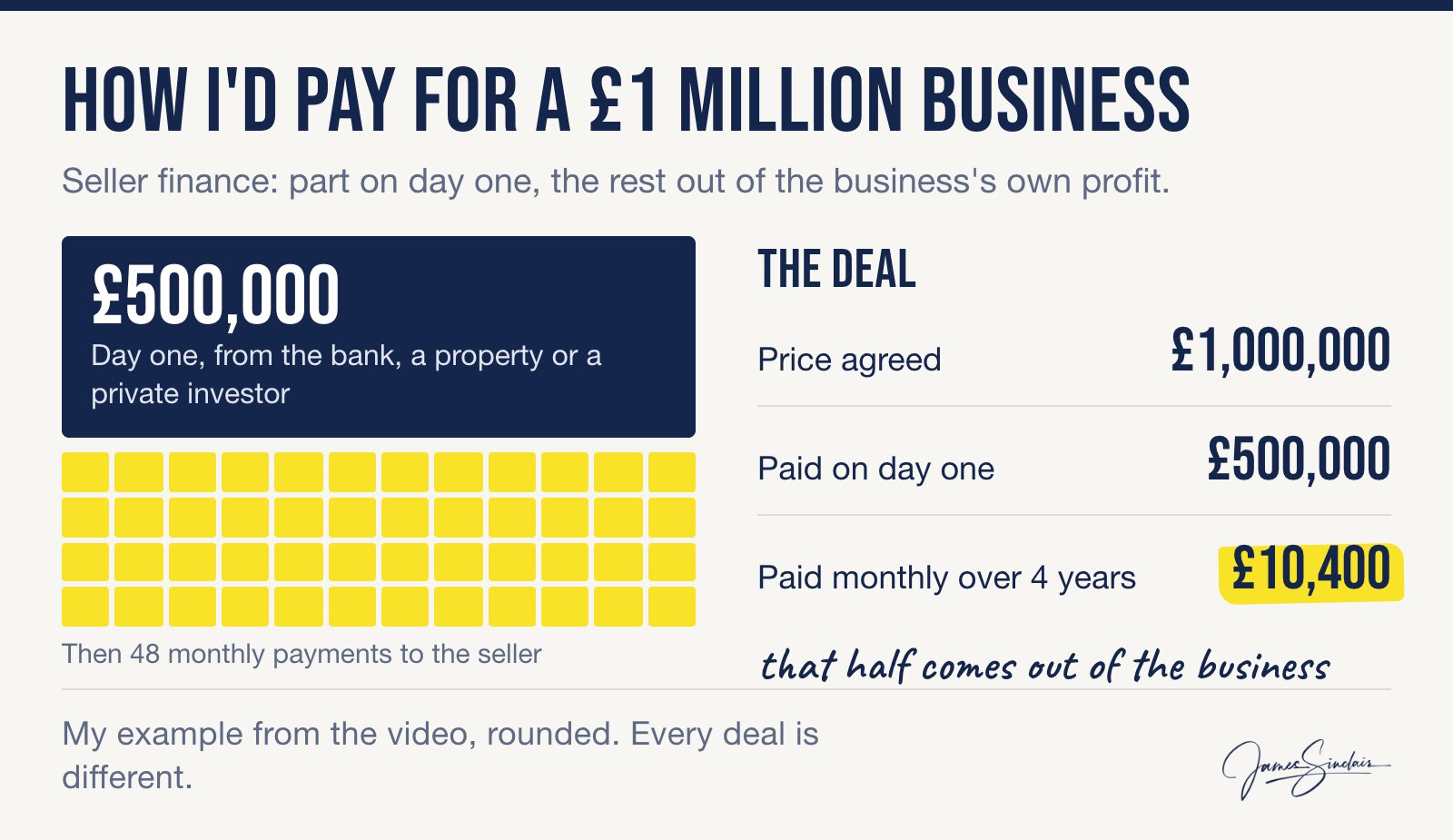
The seller gets a charge over the business and my personal guarantee, because I want to pay them back. Often it's interest free.
It protects you too. If a skeleton falls out of the cupboard after you've bought, like an unpaid tax bill, an insurance claim or a supplier nobody paid, you can offset it against what you still owe the seller.
Two more ways to fund the rest:
Refinance the assets
If the business owns equipment and stock, buy it, then refinance those assets. A private investor or bridging lender can cover the gap until you do.
Ask your suppliers
Tell a big supplier you're buying the business and moving all its supply to them, and ask them to help fund it. They grow, and you get the deal.
Why it's worth the wait
Expect delayed gratification. You might run the business for three, four or five years without taking money out, because you're paying for it.
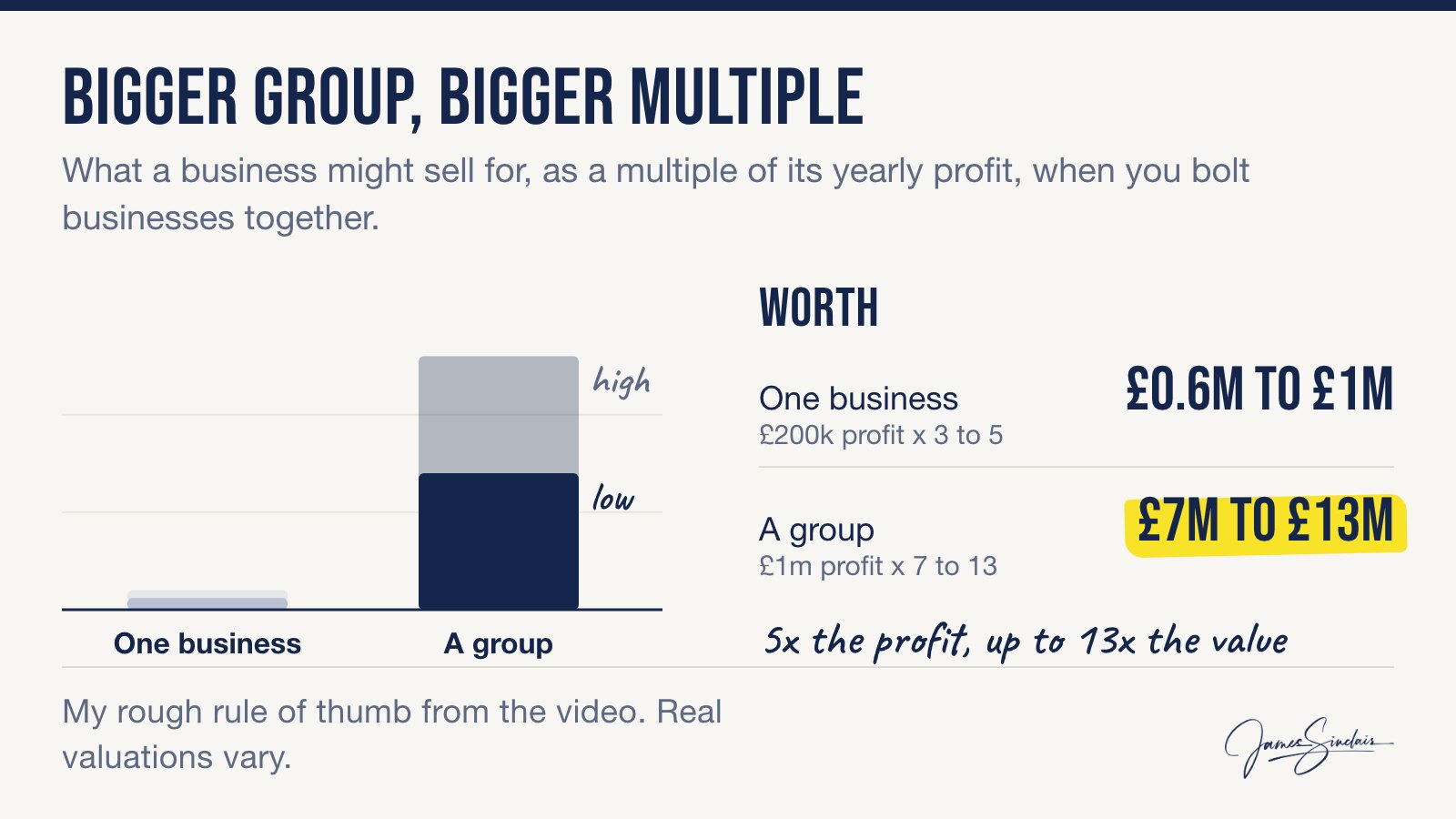
But build something bigger and it's worth more for every pound of profit. A business making a couple of hundred thousand a year might sell for three to five times profit. Bolt enough together to make £1 million or more and you could be looking at seven times, ten times, even twelve or thirteen.
Three things I've learned the hard way
Trust your gut
I've only been done over once, by someone I didn't trust, on a deal that looked too good.
Have an investing day
I see at least six deals a month, in person. Meeting owners levels up the questions you ask and how you structure deals.
Move fast
Time kills deals. When you find a great one and the owner wants to sell, get to work.
And if one slips away, don't chase it. There'll be another.
Deals are like buses. There's always another one coming.
Got a business in mind?
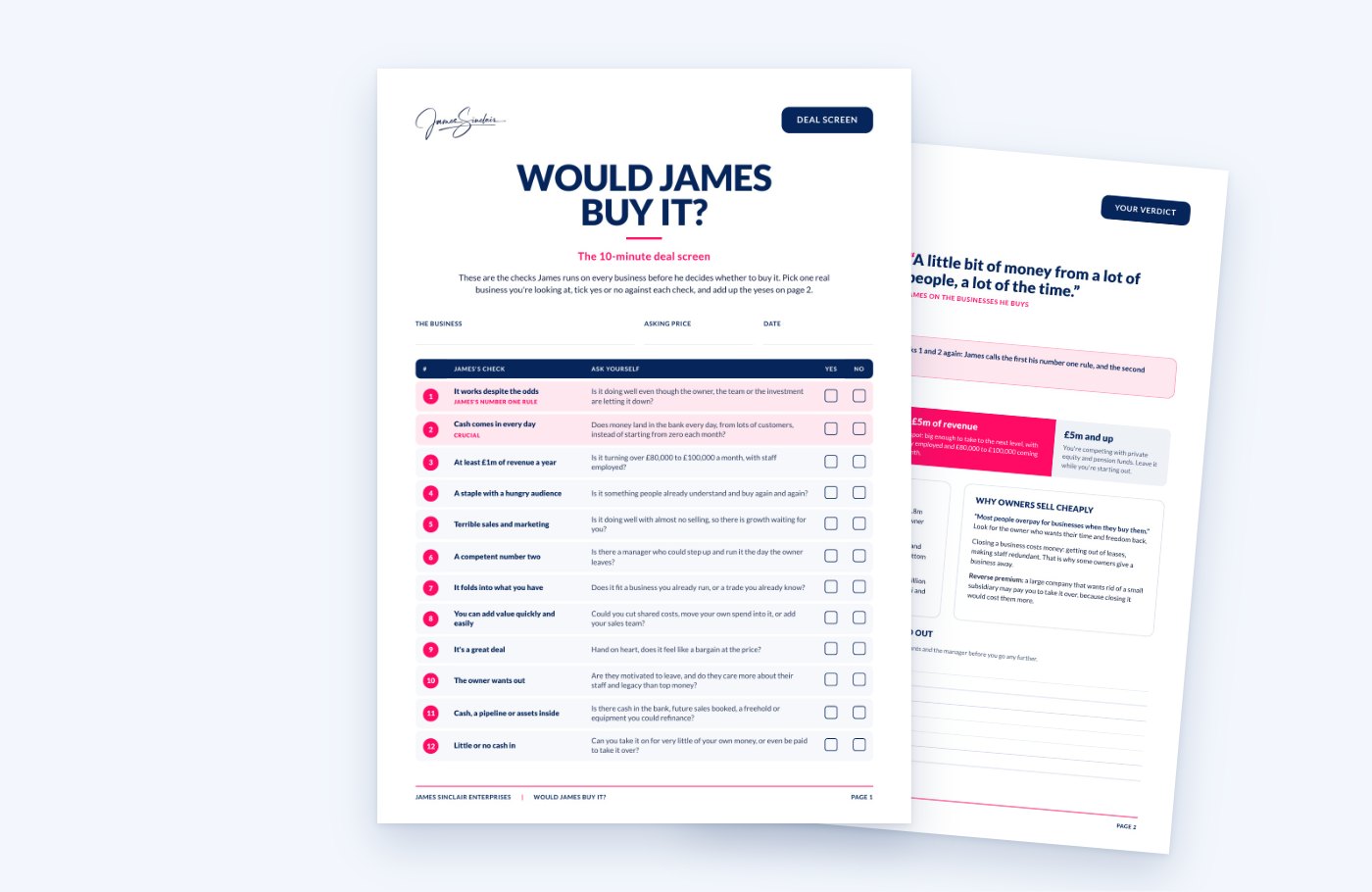
Would James Buy It? is my 10-minute deal screen. Score any business for sale and know if it's worth a second look.
Take a look →Magically yours,
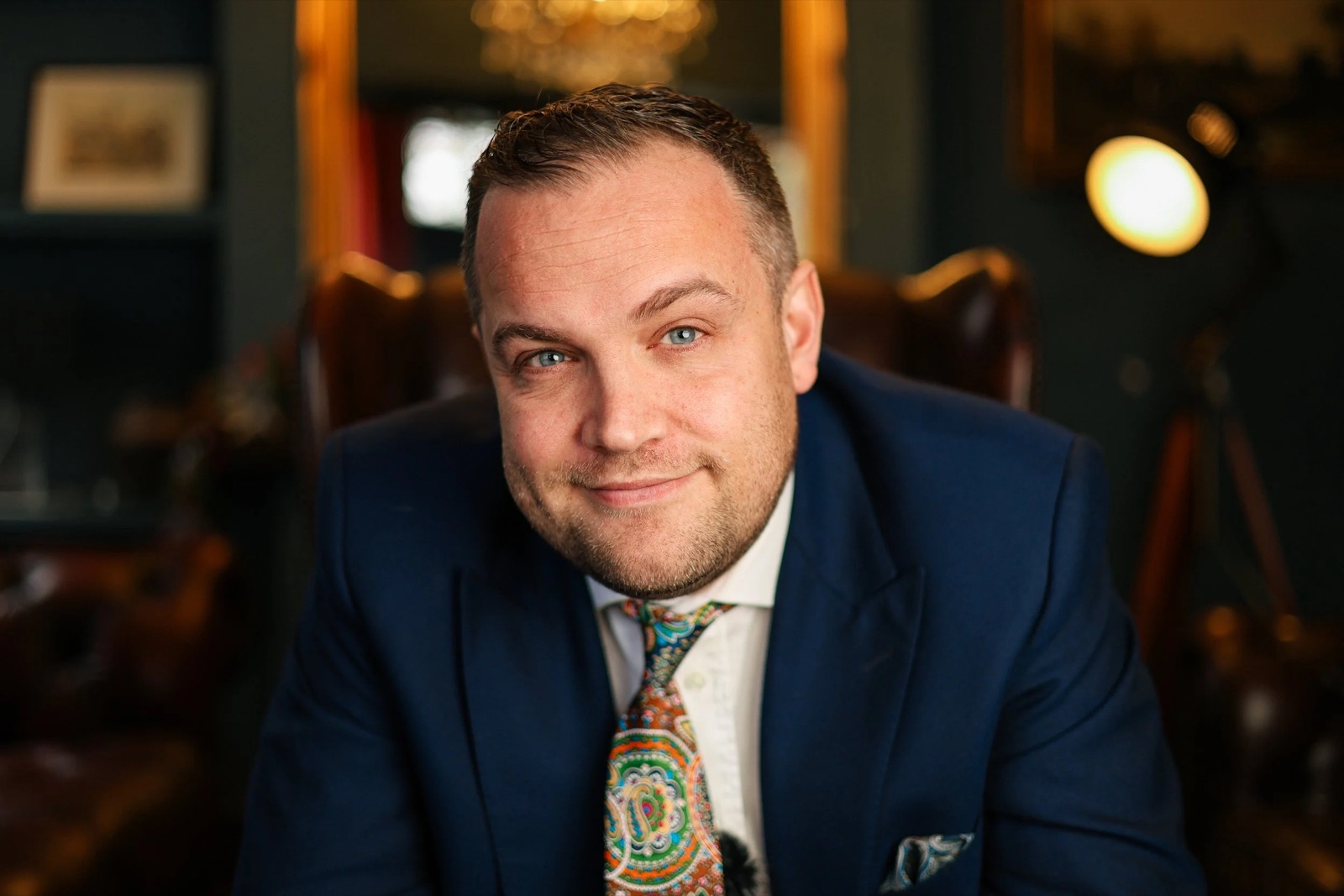
James Sinclair
Founder of a group of over 40 businesses
James started as a children's entertainer. Twenty years on, his group runs over 40 businesses with over 3,000 staff and one million customers a year, from farm parks and day nurseries to a hotel and a roller rink. Everything he writes comes from running them.