How I think about property
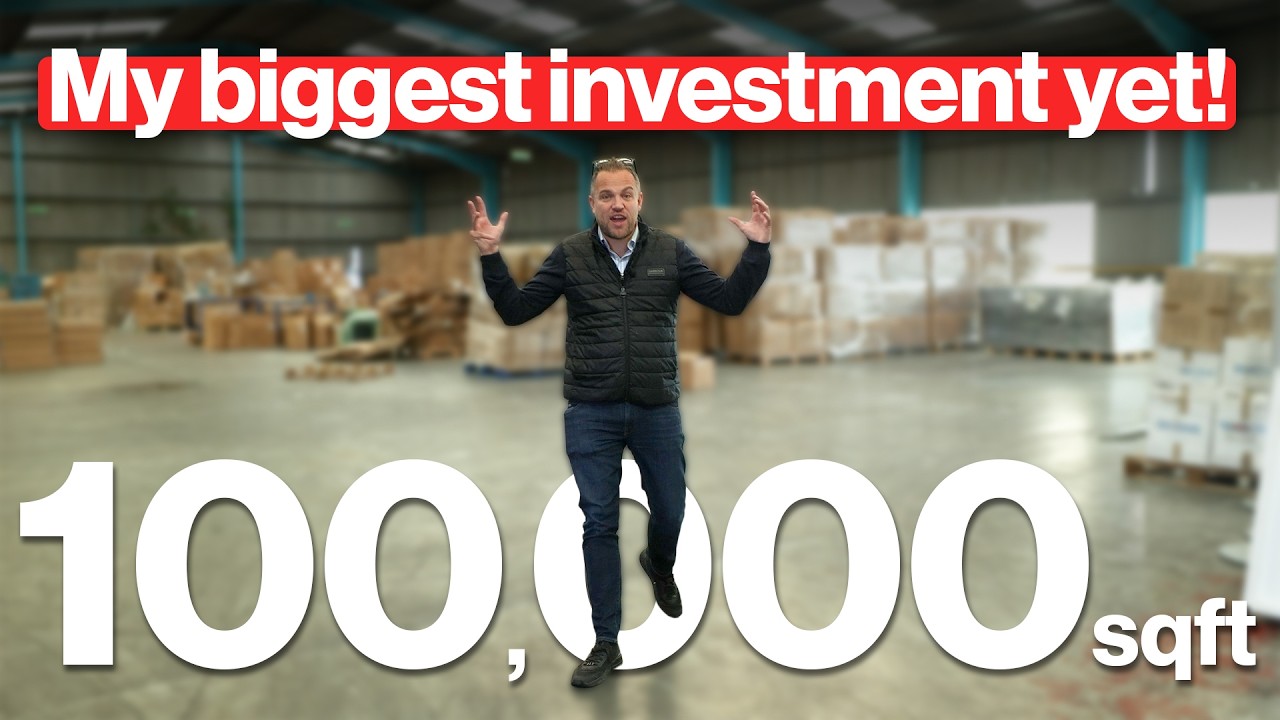
My businesses trade from farm parks, nurseries, warehouses and offices. Wherever it makes sense, I want to own the building.
Fast pounds and slow pounds. Half my profit goes into fast pounds: the cash flow from running the business. The other half goes into slow pounds, the assets that build over time. Run a business for 10, 15 or 20 years and you want something to show for it at the end. Commercial property is the obvious slow pound.
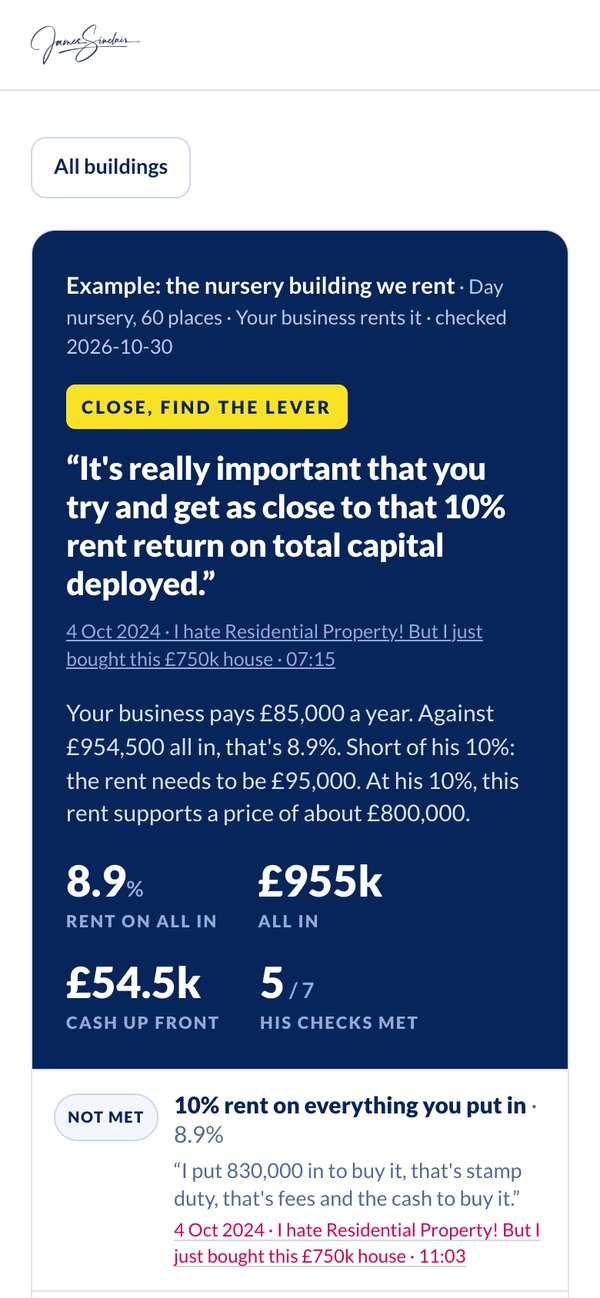
It has to pay 10%. For an investment, the rent has to be at least 10% of the total capital deployed. Red Lion Business Park cost me £1.4 million, so I wanted £140,000 a year. It brings in £200,000 now.
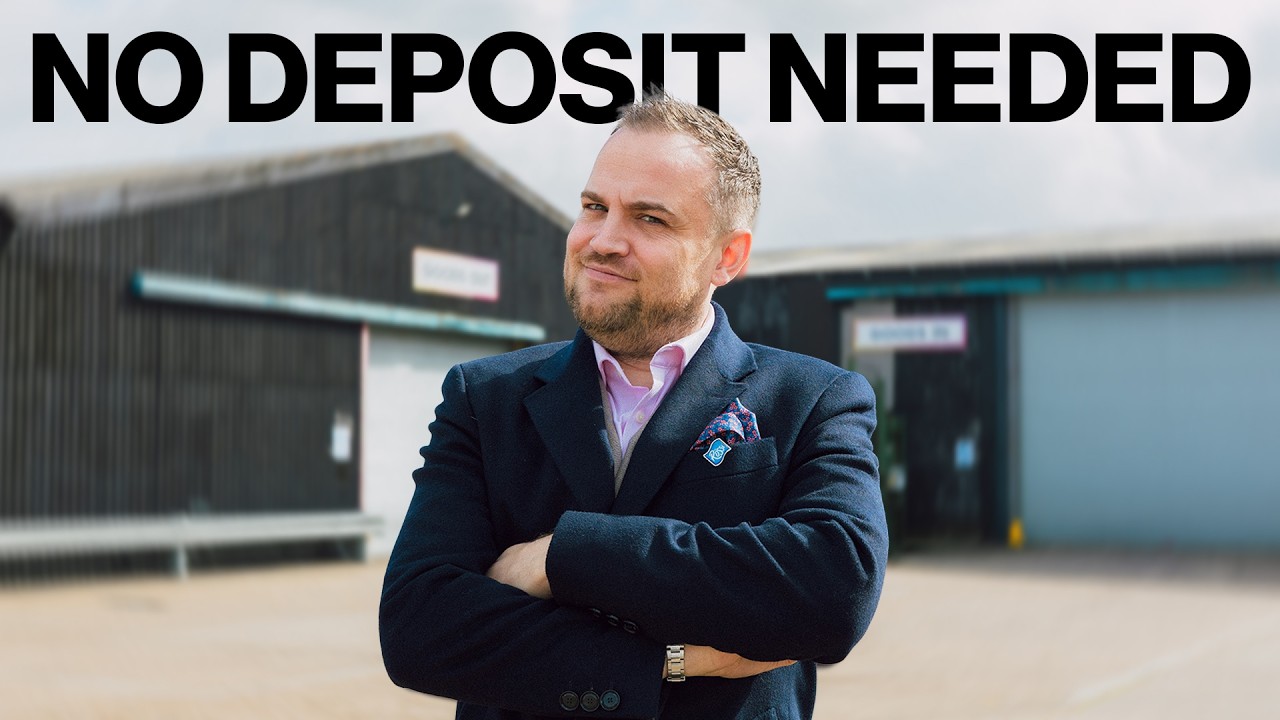
Keep the cash in the business. Done the traditional way, a £1.4 million estate needs about £500,000 in deposit, legals and stamp duty. So I buy time instead, with a lease option, a delayed purchase or a private mortgage, then get the bank to value the building with a profitable business trading in it.
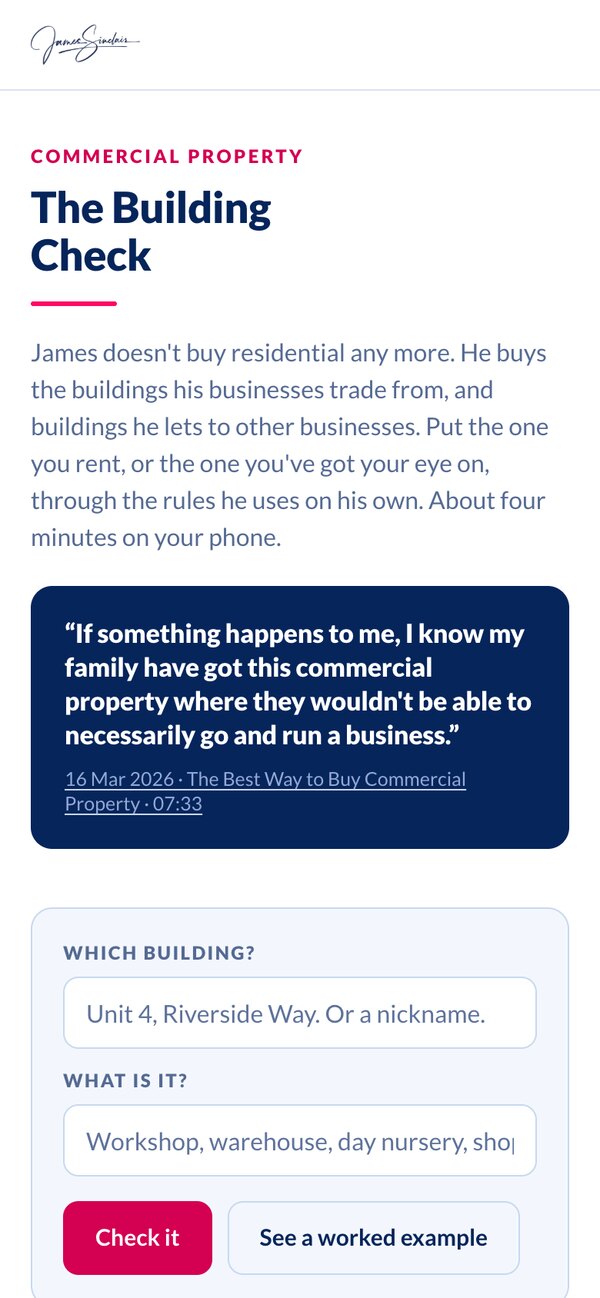
It protects my people too. If I get ill, or something happens to me, my family has the buildings even if they couldn't run the businesses.