How to buy commercial property without a big deposit
A farm park worth around £7.5 million. A day nursery. A roller skating rink. Buy freeholds like these the usual way and you need millions for the deposits and stamp duty. Here's the trick I use to own the building and keep my cash in the business.
Watch: the best way to buy commercial property when you don't have the deposit
Fast pounds and slow pounds
You can turn over millions and still have very little left once you've paid the staff, the overheads, the utilities and the taxman. So I live by a rule I call 50/50 living.
Half my profit goes into fast pounds: the cash flow from running the business. The other half goes into slow pounds: assets that build over time. Run a business for 10, 15 or 20 years and you want something to show for it at the end.
Commercial property is the obvious slow pound. Buy a £1 million warehouse and you could rent it out for £100,000 to £150,000 a year. It also protects my people. If I get ill, or something happens to me, my family has the buildings even if they couldn't run the businesses.
For an investment, I've got one simple rule. It has to bring in rent of at least 10% of the total capital deployed. Red Lion Business Park cost me £1.4 million, so I wanted £140,000 a year at least. That's what it brought in when I bought it. It brings in £200,000 now.
That 10% pays the mortgage, the repairs and the tax, and still leaves something over. The problem is the way in. Done the traditional way, a £1.4 million estate needs about £500,000 in deposit, legals and stamp duty.
The trick: buy time, then let the bank value it
This works for trading businesses much more than for investment property. A bank values a building with a profitable business in it above the bricks on their own.
And there are two kinds of valuation. I can ring Savills or Christie's myself and pay for one. The smart move is to get the bank to instruct it. A bank-instructed valuation carries far more weight than one you commissioned.
Here's a live deal. I agreed to pay £950,000 for a day nursery. The owner had no mortgage on the building, and the nursery had a problem with Ofsted, which meant nobody could mortgage it yet.
So I said: let me pay you £5,000 a week, sort the registration out, and buy it properly once it's mortgageable. I did that for nine months. My management team went in, with our systems and processes, and the profit went up.
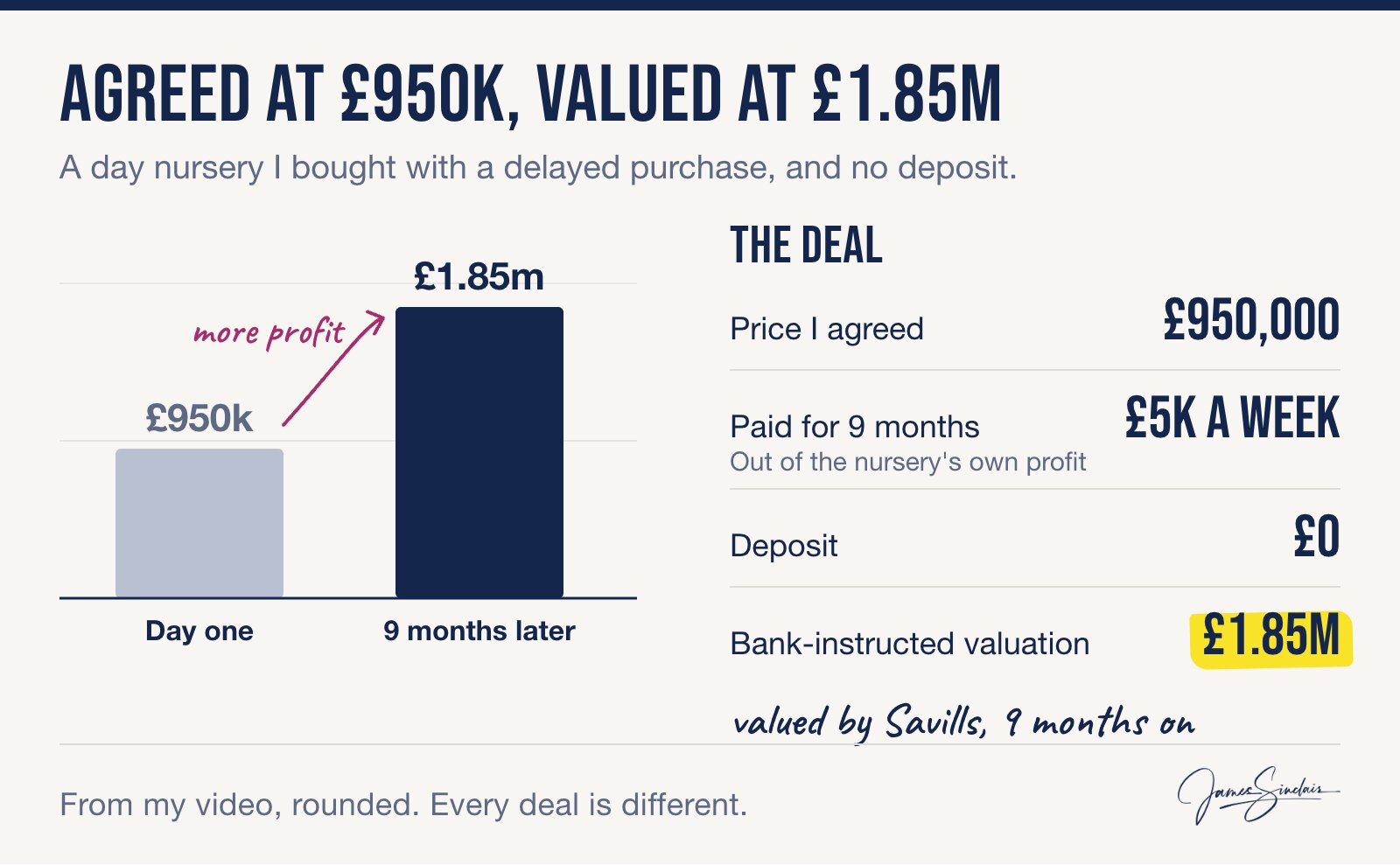
Then the bank instructed Savills. They valued the nursery building and trading business at £1.85 million, nine months after I'd agreed to pay £950,000. The nursery's own profit covered the £5,000 a week.
I put no money down. I put in time, effort, energy and enthusiasm. It worked because the seller had no mortgage and a problem I could solve.
Protecting cash flow is an entrepreneur's number one task.
Good CEOs, MDs and entrepreneurs optimise cash. Every pound you don't sink into a deposit is a pound that stays in the business, working.
Three ways to buy yourself time
Every one of these does the same job. It gives you time to push the value up before the bank comes in.
A delayed purchase
Agree the price now and pay it later, like the nursery. They're harder deals to get. A seller says yes when they've got a problem you can solve.
A lease option
Take a lease with a purchase price fixed for a date in the future. Then spend the next three to five years trading a profitable business in there.
A strict private mortgage
Put a smaller deposit in, say £100,000. The seller keeps a first charge, just like a bank would. Build the business, then refinance them out in about three years.
Marsh Farm was a lease option. I'd been the tenant for 12 years, and I'd written into the lease that any capital improvements I made came off the purchase price. I agreed to pay £2.25 million for the land and buildings.
But the trading business on it makes a million quid a year. Say that's worth £5 million. Add it to the £2.25 million, plus a bit of marriage value, and the site is worth £7.5 million. So I went to the bank with their own Savills valuation and £5.25 million of equity. No deposit, just the stamp duty.
I've just bought a hotel on a private mortgage. And I put a much lower deposit into Red Lion than a bank would have needed, increased the rents, got the value up, then refinanced with Handelsbanken. I've done it with Coutts, HSBC and Barclays too.
How the bank values it
Banks look at three market values. MV3 is the bricks and mortar on their own. MV2 sits in the middle. MV1 is the property with you trading a profitable business in it.
Say Savills puts a day nursery at £2 million as an MV1, £1.5 million as an MV2 and £1 million as just the land. Get a good relationship with your bank and they'll consider the MV1. You can borrow 75% loan to value against it.
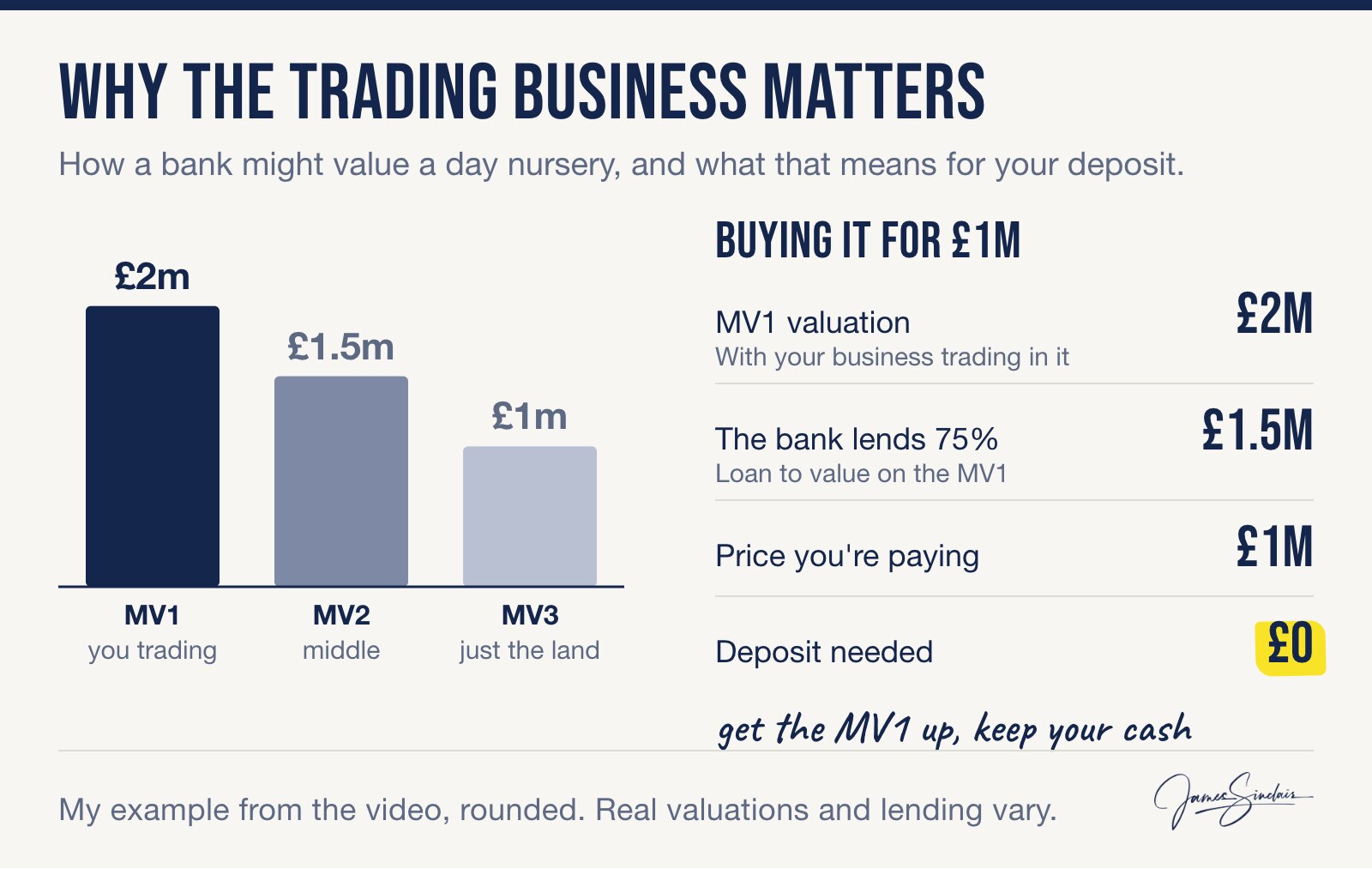
Buy it for £1 million when it's valued at £2 million and you don't need a deposit. Your whole job in the time you've bought is getting that MV1 up.
The four steps
It sounds complicated. Broken down, it's four steps.
Agree to buy, with an option of some sort: a private mortgage, a lease option or a delayed purchase.
Trade the business and grow its profit, so the MV1 goes up.
Get a bank-instructed valuation that shows it's worth more than the price you agreed.
Agree terms with the bank, pay the seller out with the bank's money, and you own the building.
Sometimes you'll still need some money. I put a £175,000 deposit into Roller City, the roller skating rink we bought for £2.6 million. But I didn't have to find £700,000 or £800,000.
Get the banks on your side
We bank with several institutions, and I think of them as family. One is Mum and Dad, the most dependable. The others are the wise old aunt and the fun uncle. Some banks love commercial property, some love childcare, and some won't touch it.
Spread your debt as long as you can. I borrowed a million on a three-year loan at £35,000 a month. Moved onto 25-year term debt with my property portfolio, that's £5,000 a month. That's cash flow creation right there.
I once told Investec I'm like a private equity firm without the money. I do the deal, then worry about funding it. They said that's exactly what private equity does.
Doing the deal is the hard part. Funding a good deal is often much easier than we all think.
So make yourself attractive for financing. Here's where I'd start this week.
Call new finance brokers
A good set of bank managers and a great broker belong in every ambitious entrepreneur's toolbox.
Know your numbers
Inside out. Employ an accountant if you need to.
Meet some new banks
Learn what each one likes, and which sectors they won't go near.
Buy someone a coffee
Find a business owner further along than you and ask how they did it. I still do.
Going to the bank soon?
Get the Bank to Say Yes shows you the pack a lender wants on the desk, and how I keep the cash in while I borrow.
Take a look →Magically yours,

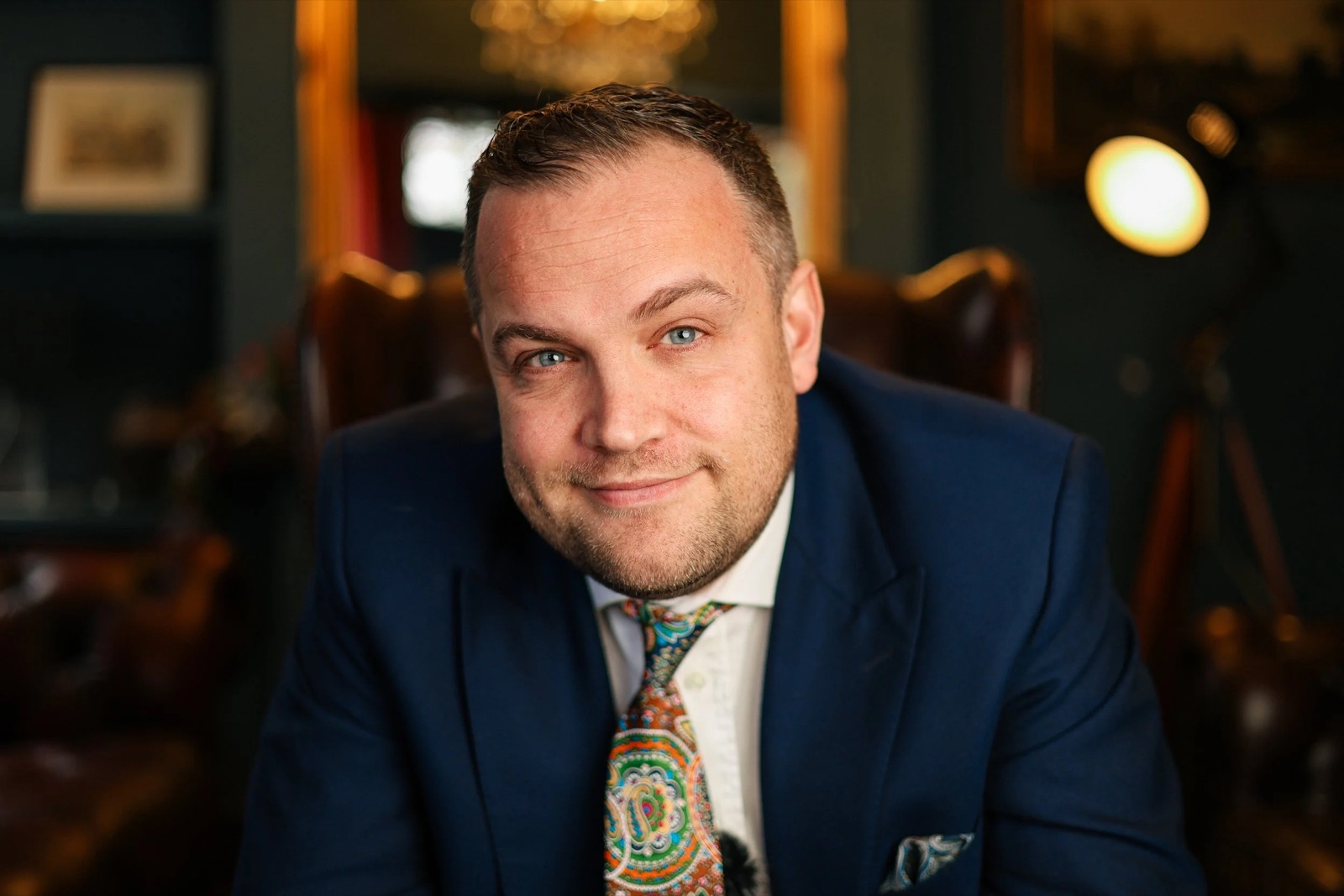
James Sinclair
Founder of a group of over 40 businesses
James started as a children's entertainer. Twenty years on, his group runs over 40 businesses with over 3,000 staff and one million customers a year, from farm parks and day nurseries to a hotel and a roller rink. Everything he writes comes from running them.