6 profitable businesses to start, from someone who runs over 40
Most businesses are just about getting by. The few that last more than ten years and make real money usually have the right model behind them. Here are the six I rate, the clues that make each one work, and how to check if yours has them.
Watch: 6 very profitable businesses to start
The model sets you up for success
My group has over 3,000 staff and I've been trading for about 20 years. I've been in some businesses that were tough. Like pushing water up a hill.
What made the difference was the model. Some models make profit almost predictable. Others make you start from zero every month, hunting for new customers.
I trade in a lot of these six myself, so this comes from experience. Whether you're starting out or deciding where to put your next pound, look at the model before the idea.
Six profitable businesses to start
Here they are, with the one thing I love most about each.
Day nurseries
A family stays with you four to five years, and pays up front.
Food services
Supply the school, the factory or the office block, and you know what they'll order.
Contract catering
You run the canteen. Same service, day in, day out, on a contract.
Commercial property
Long leases, the tenant looks after the building, and the yields are good.
Niche wholesale
Big enough to build, too small for Amazon or the supermarkets to bother with.
Hygiene and waste
Commercial customers, predictable revenue, and people still need it in a downturn.
And a bonus seventh: professional services. Accountants, dentists, solicitors, finance. Anything professional and regulated is easy to value, and other people's money wants to buy into it.
The clues, through my day nurseries
I started my first day nursery nearly 20 years ago. I've got ten now, with a few more in the pipeline.
A customer stays four to five years, so the average lifetime value is good. That's one of the most important things to look at, whether you're starting something new or deciding to grow the one you've got.
Parents pay up front, so you're not lending money to your customers. And it's regulated. The government sets the rules, and every competitor works to the same ones.
Then there's the little cheat I use to judge any model. Do pension funds, private equity, venture capital or the banks want to invest in that sector, or lend to it?
If other people's money wants in, you know you're on to a winner.
Build a day nursery doing £1 million of sales and £200,000 of profit, and someone will be chomping at the bit to buy it. Private equity, or another owner rolling nurseries up. I've bought day nurseries from other people and rolled them into ours myself.
Banks love lending to profitable day nurseries. They don't love lending to profitable restaurants. A new restaurant opens in town and everyone goes to try it. A new nursery opens and your parents stay, because their children love your staff.
One catch. It has to be big enough. If it looks like a profitable job, nobody will want to invest.
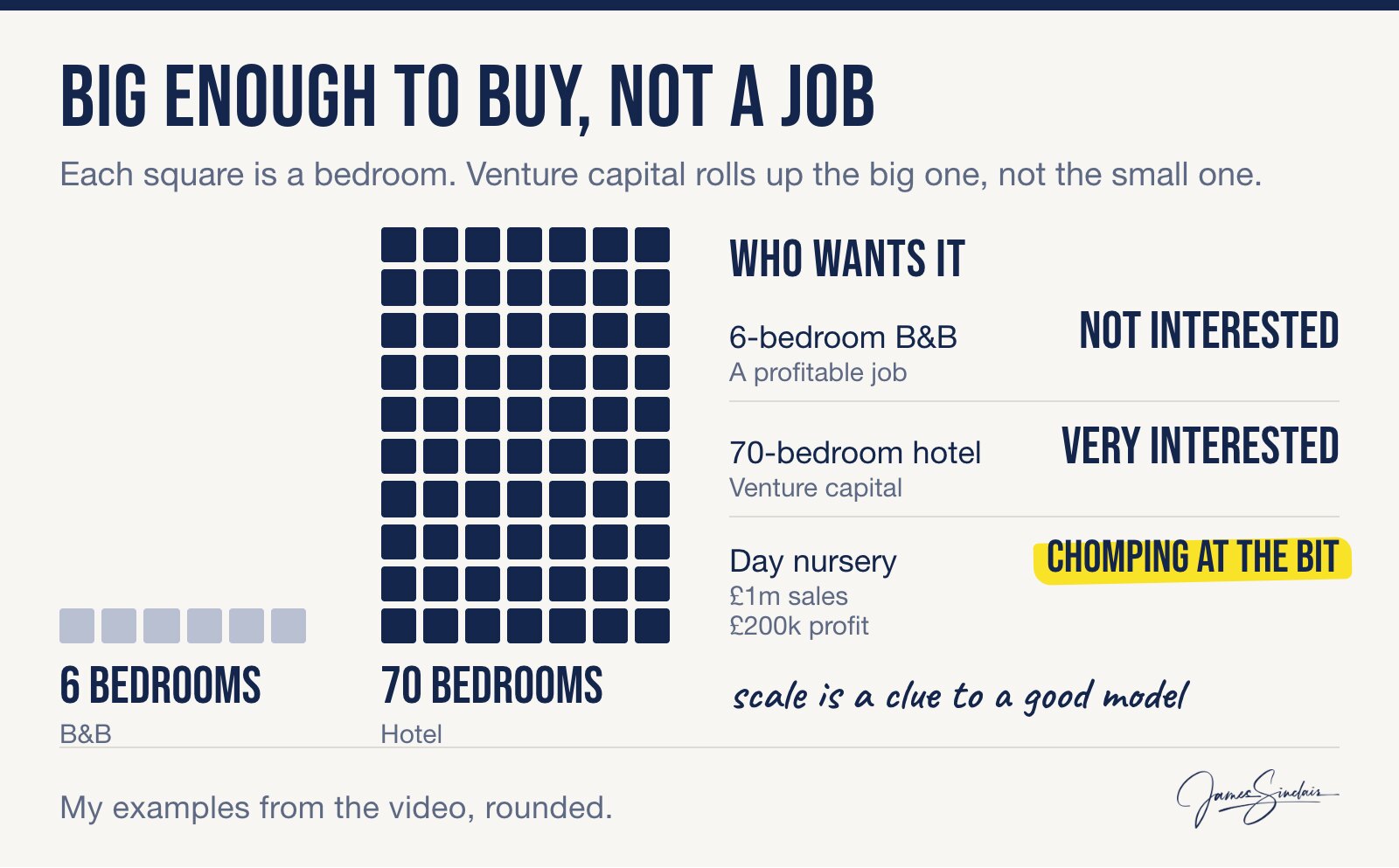
Scale is a clue. So is lifetime value, cash up front, regulation and a roll-up going on. I've put all of them on one page.
Food services and contract catering: predictable revenue
Imagine the person who has to feed a big office block, a factory or a secondary school. They need a food services business. Sign one up and you know what they'll be ordering, week after week.
A restaurant might see a customer once or twice a year. Supply a hundred restaurants and they keep buying from you. That's predictable cash flow, and the big firms are buying these businesses up all the time.
I liked it so much I started one. I bought an ice cream company supplying restaurants, theme parks and my own attractions, then bolted on a food services business supplying all of my venues. It's turned into a really profitable, very predictable business.
Contract catering is the other side of it. You're the one running the canteen in the school or the factory, buying the food in and feeding everyone. You know how many people come every day, so you know your revenue. The clue's in the name. You've got a contract.
I've bid for lots of these contracts, because with a food services business behind me I can own the supply chain end to end. And a good contract catering business isn't key person driven. The founder isn't the one making it all happen.
Commercial property: where my slow pounds go
Early on I funnelled cash out of my trading business into buy-to-let houses and flats. When the rules changed, I pivoted into commercial property rentals. It needs a bit more cash and a bit more experience, and that higher barrier to entry is exactly why it's more profitable.
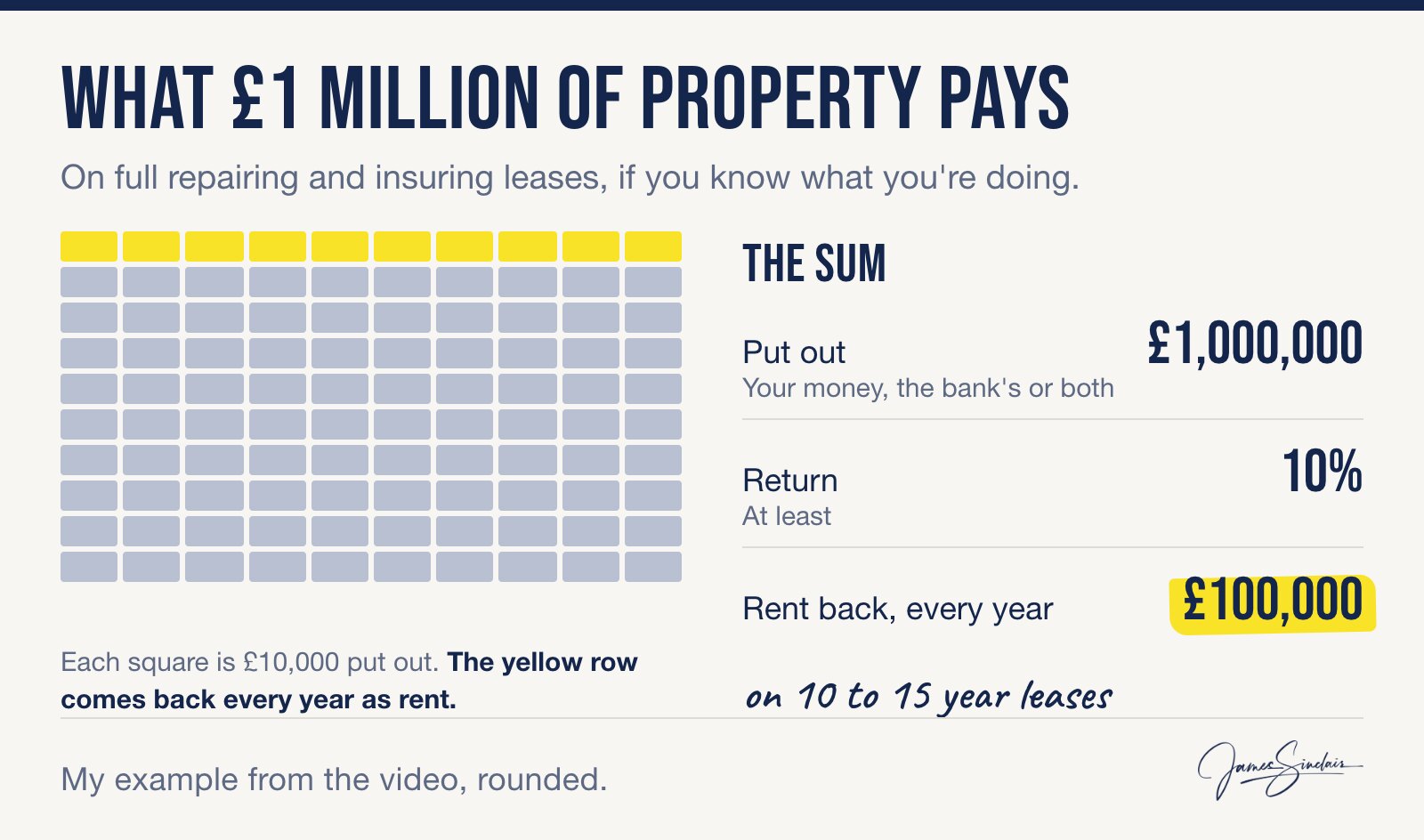
I own an industrial estate and lots of commercial property on full repairing and insuring leases. The tenant looks after the building, and you can sign people up for 10 or 15 years. Small warehouses and storage units especially. Storage is a great model.
Put £1 million out, your money, the bank's or a mix of both, and if you know what you're doing you can get at least a 10% return. That's £100,000 of rent coming back.
My advice is always the same. Buy the property your own business operates from first. Then keep putting some cash in, and eventually it turns into a lovely business on the side of the one you've got.
Niche wholesale and waste: riches in niches
Niche businesses are protected against margin erosion. You're not driving your price down to compete with the giants, so you keep more gross profit.
Take fishing. It's big enough to build a £10 to £50 million business importing, white labelling or making your own products, but probably too small for Amazon or the supermarkets to do every line. I do the same with a make-a-bear teddy business and children's arts and crafts. The biggest player in the world might be a £200 million business, too small for Mattel or Hasbro to bother with.
The Goldilocks niche
Not too big, not too small. Just right. My wholesale ice cream business is one: good quality ice cream, not every type of food.
Hygiene and waste
Skips, nappy bins, sanitary bins. Lots of small independents that get rolled up into bigger companies, and still needed in a downturn.
The right model still needs a manager
When owners want more profit, they turn over the same stones. More sales, lower costs, a salesperson, efficiency. The stone that needs turning most is the manager stone.
Somebody has to be accountable for the P&L, day to day, and that's the manager. The owners I meet who are absolutely having it off all have E + M. Entrepreneur plus Manager. You only have a great business when it's a machine that no longer needs your pedal power.
Keep the brief narrow
Make the role too broad and you can't hold them accountable. I've been guilty of this.
Hire people better than you
Who, not how. Find managers with a tonne of experience and a proven ability to make profit.
Pick a model with the right clues, put a great manager in charge of the numbers, and be ready for delayed gratification. The rainbow is longer than you realise.
The stronger the brief, the less grief you'll have.
Get those two right and you can be in business for a long time, and actually make some profit.
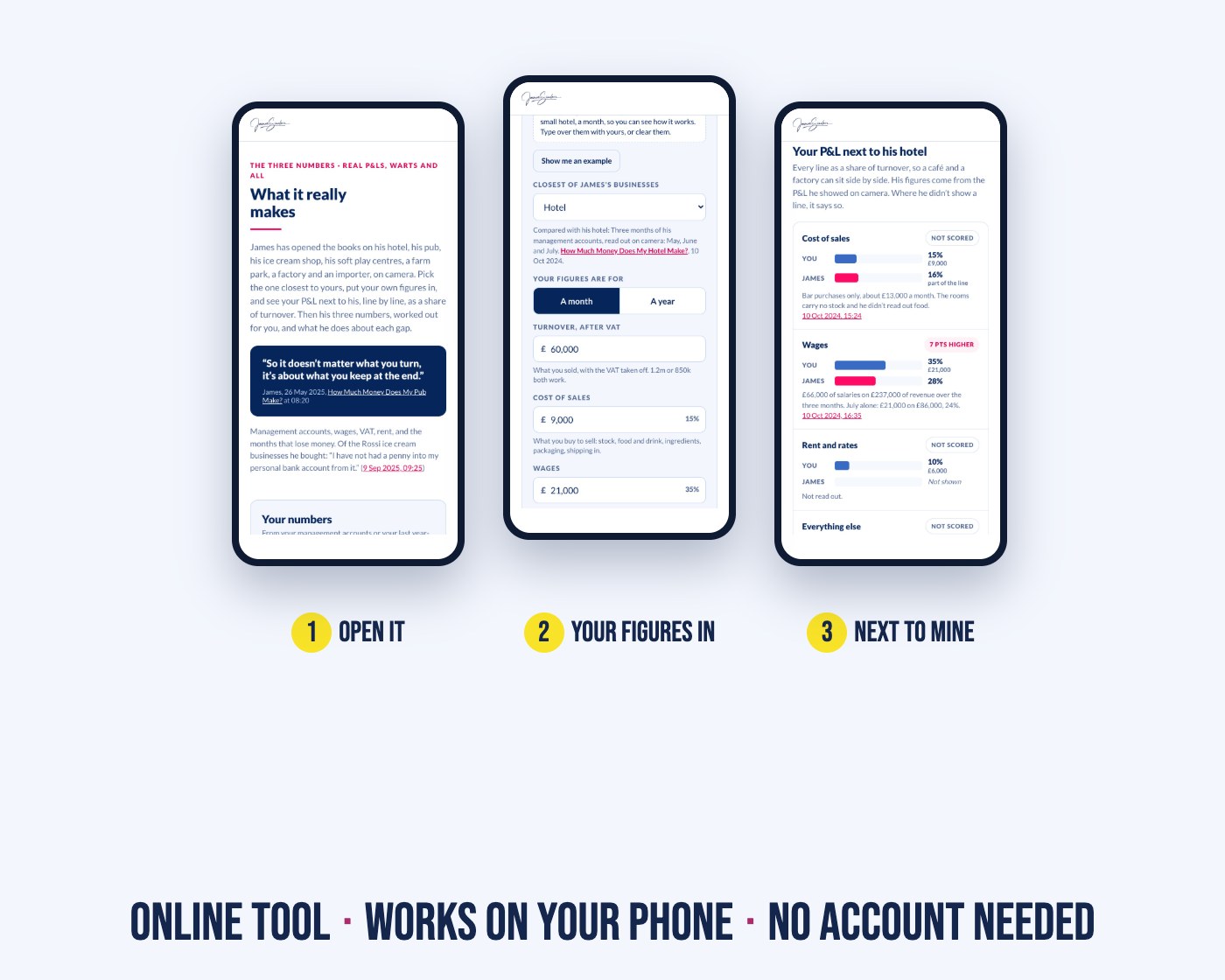
How profitable is yours, really?
What It Really Makes shows where you're different from the closest of my businesses, line by line.
Take a look →Magically yours,

James Sinclair
Founder of a group of over 40 businesses
James started as a children's entertainer. Twenty years on, his group runs over 40 businesses with over 3,000 staff and one million customers a year, from farm parks and day nurseries to a hotel and a roller rink. Everything he writes comes from running them.